
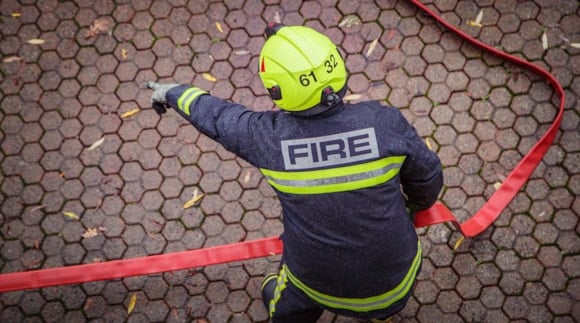
Devon and Somerset Fire and Rescue Service has warned that extreme weather is putting increasing pressure on its resources as it launches a public consultation on its five-year plan.
The draft Community Risk Management Plan (CRMP) 2027-2032 identifies flooding and wildfires as growing risks, with prolonged incidents potentially affecting the service’s ability to respond to emergencies elsewhere.
It acknowledges that extended response times are an increasing challenge, influenced by rural geography, road congestion, infrastructure pressures and appliance availability.
The draft also highlights difficulties maintaining a sustainable on-call workforce, as changing employment and commuting patterns affect firefighters’ availability, particularly during the day.
Cllr Simon Coles, Chairman of the Devon and Somerset Fire and Rescue Authority, said the summer had demonstrated the impact extreme weather could have on the service.
“This summer showed what effect extreme weather can have on our resources and ability to respond to incidents,” he said.
“We need to continue to review and adapt to emerging risks.”
The new plan marks a shift in emphasis from the previous CRMP, covering 2022-2027. While that plan identified flooding and wildfires as future risks, the latest draft treats them more explicitly as growing operational pressures.
For Devon and Somerset, where rural geography can mean longer journeys for crews, prolonged incidents requiring specialist equipment and sustained attendance present an additional challenge to maintaining emergency cover.
The proposed response places greater emphasis on prevention, preparedness and community resilience.


According to the proposal, the service intends to work with councils, emergency services, voluntary organisations, businesses and residents, while fire stations could increasingly be used as community assets.
The draft also identifies emerging risks from lithium-ion batteries, including those used in e-bikes, e-scooters and domestic energy storage systems.
It proposes a review of the service’s existing frontline provision, considering changing risks, future fleet requirements, its ageing estate and affordability.
The document does not announce station closures or reductions in fire engines. However, the review raises questions about how resources may be configured to meet changing demands over the next five years.
Another notable difference is that the new draft does not repeat the previous plan’s numerical response standards of 10 minutes for dwelling fires and 15 minutes for road traffic collisions, with a target of achieving those standards at least 75 per cent of the time.
Instead, it acknowledges increasing variability in response performance and identifies appliance availability as a continuing challenge.
The omission does not necessarily mean the standards have been abandoned, but questions have been raised about what response-time targets will apply from 2027 and how the public will be able to measure performance.
The consultation closes at 9am on Monday, January 4, 2027.
Residents can view the draft plan and submit responses through Devon and Somerset Fire and Rescue Service’s website.
Comments
We've recently changed our login process. If you have an account for commenting, you will need to re-register on the login window.
This article has no comments yet. Be the first to leave a comment.