
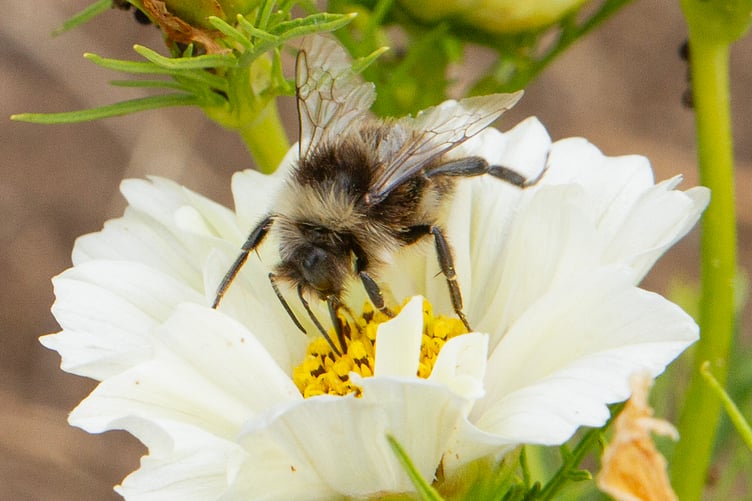
Gardens have provided a link between people and nature for many years. Large Victorian houses often had a substantial ornamental garden and even during the 1950s and 1960s modest houses were often being constructed with a small front garden and a larger space at the rear for growing vegetables.
Now, most houses are built to the edges of the available land with car parking being more important than garden space. Nature is retreating to nature reserves where it is only available to those who can drive there. Most buses don’t stop at nature areas so a lot of people have lost the nature link. There is a risk that some sections of the community particularly children, the elderly, and those with various forms of disability or illness are being adversely effected.
Fortunately, there are a few simple ways to reduce this impact. Even a container with a few flowers or herbs can attract passing insects and a more careful use of strimmers/mowers on open spaces will help.
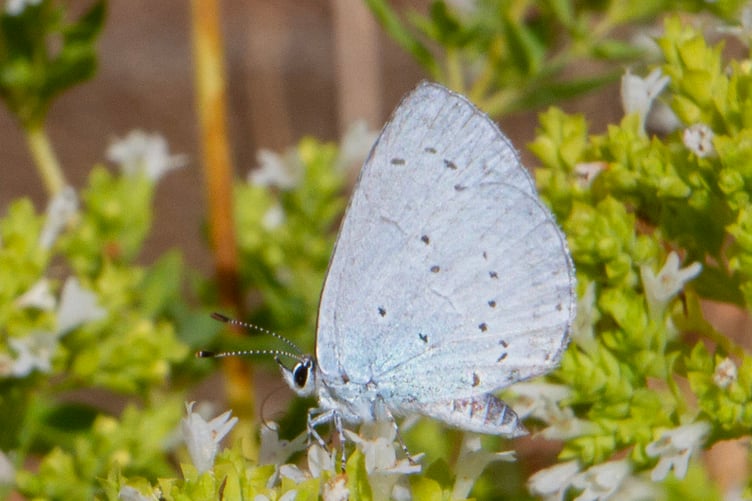
However, when it comes to attracting insects, not all flowers are equal. Plant breeders are increasingly producing flowers with a complicated petal structure, to have the greatest impact on plant buyers, but many insects can’t easily feed from these blooms. Simple flat open petals can be more productive.
While large flower heads may have more space for several insects at a time, plants with a high density of small nectar rich individual flowers can be more effective for bees and other insects.
I find Rosemary is good for the early bees and hoverflies. Then Cotoneasters become a good alternative. Although some varieties will grow to become a small tree, there are dwarf forms which also produce berries in the autumn for birds. There are several varieties of Marjoram/Oregano which produce clusters of tiny nectar rich flowers as well as being a useful herb for kitchen use.
In suitable areas, a bird box or feeder will be helpful for resident birds (but keep it clean). Be careful about your choice of bird boxes because some cheap poor quality boxes are too small and won’t last. Check the recommended sizes. I make my own boxes so I can add a few personal touches. When recently making replacement boxes for Andrews Wood I tried a few with side entrance holes, hoping this may attract Tree Creepers, but found Blue and Great Tits were also keen to use them.
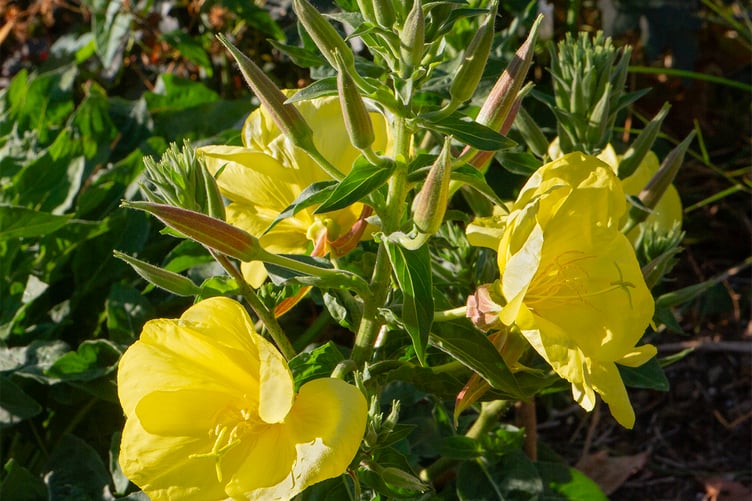
A weed is simply a flower in the wrong place so I allow a few wildflowers to grow in my garden although with some species I have to deadhead them before they set seed. Many years ago a few Large-flowed Evening Primroses (Oenothera glazioviana) arrived by their own efforts and they are still here producing bright yellow flowers on 4 ft high stems.

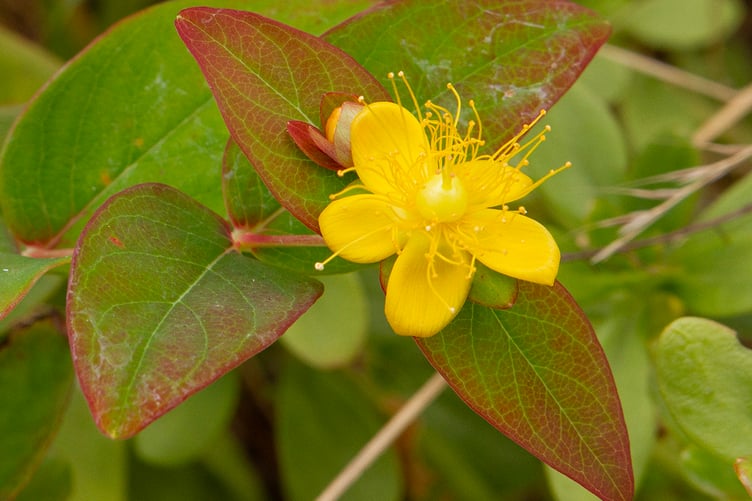
Red Campions look good but require careful management to prevent them from becoming too invasive. Another self seeded arrival was Tutsan which is a member of the Hypericum family but is more resistant to rust than some of the cultivated forms. The bright yellow flowers produce dark red berries which gradually age to black. Purple Toadflax (Linaria purpurea) is a more recent arrival, with flower stems up to 5 ft, which bees find attractive.
I have a grape vine which I leave to provide an autumn treat for the birds, particularly Blackbirds. Natural food has been scarce this summer and many berries are rather dry, so some birds have already started eating the grapes.
Some wild and cultivated plants will initially fail to grow well where they have been planted, so they will gradually ‘move’ by self seeding until they find a more suitable location. Echiums keep appearing in the wrong place in my garden but often fail to grow well after I move them to a ‘better’ spot.
Although Brambles are good for wildlife they soon become too invasive for small gardens and Dandelions are a similar problem, although I am more tolerant of the Sow Thistle types which lack that long tap root so are easier to keep under control.
Comments
We've recently changed our login process. If you have an account for commenting, you will need to re-register on the login window.
This article has no comments yet. Be the first to leave a comment.