
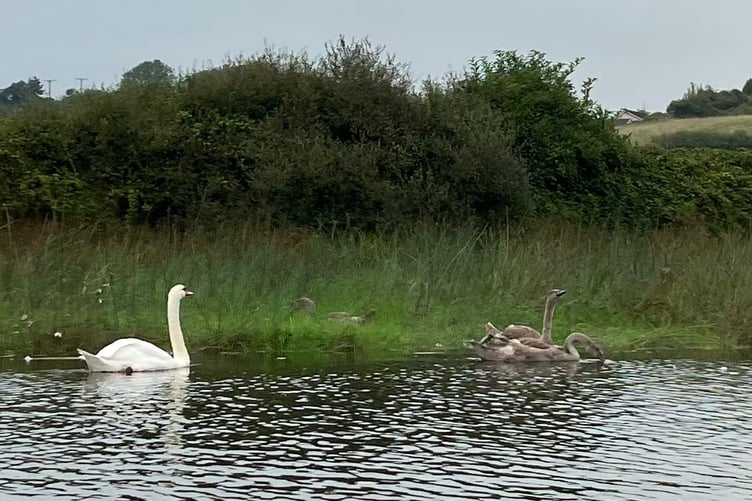
Paddling from Timbers car park at Aveton Gifford there is only a short tidal window but that has the advantage of sealing off the area to vehicle traffic. Paddling towards the sea you pass the first of the stakes that mark the position of the tidal road under the water on your right. If you continue left and upstream past the pink house to pass under the road bridge that carries the A379. Here you can see evidence of the widening of the bridge arches that took place in 1915 during WW1. Continuing upstream past marshy areas colonised by rushes and bulrushes these offer areas of quiet where swans and mallard can haul out to rest, preen and in season, nest.
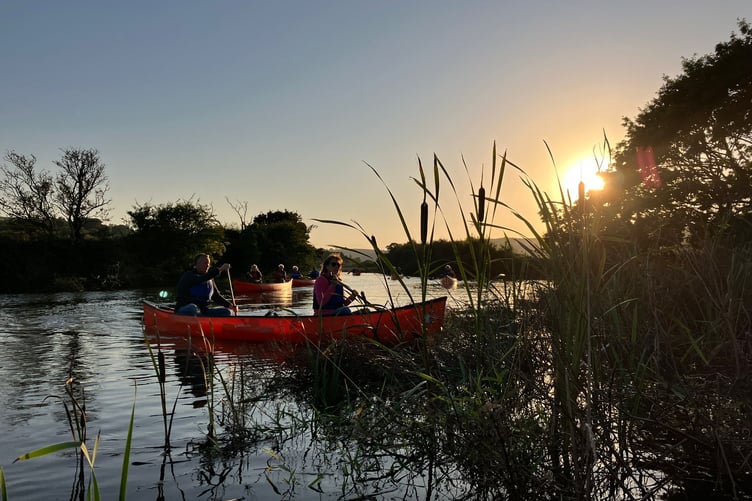
Today rushes are thought of as an indication of poor pasture but historically the rush was a mush sort after plant. They were used in the making of mats, containers, seats of chairs and candles. Loose fresh rushes were strewn on earthen floors in houses for cleanliness and insulation. A spring clean would mean the sweeping out of all the rushes and debris that had accumulated over the winter. Candles made of bee’s wax with a cotton wick were very expensive so candles made from suet with a rush wick provided a cheaper alternative. The rushes were cut during the summer months and the outer skin peeled off, except for a strip to hold the rush together and the inner pith was the wick. Animal fat collected over several weeks or months was used and by simmering, straining and cooling a tallow was produced. The tallow was heated in a metal pan, the rushes were dipped in it, left to harden and this process was repeated several times to build up the thickness of the candle. Candles which were approx. 15 inches long lasted about half an hour so several candles were used over an evening.
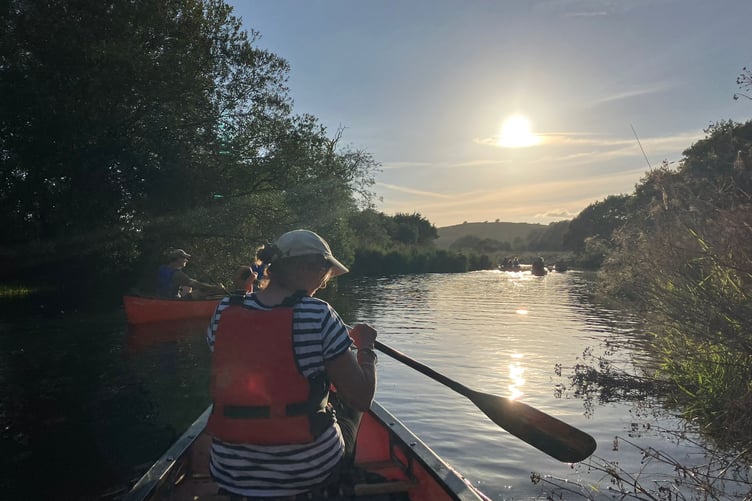
The bulrush or reedmace forms 2-metre-high clumps of strap like leaves with distinct dark brown female flower heads, they are one of our most recognisable plants. Birds such as goldfinches, blue tits and even moorhens will eat the seed throughout the winter, discarding the fluffy down on the wind like falling snow. Again the plants were used historically for weaving and the roots that are high in carbohydrates would be roasted and eaten.
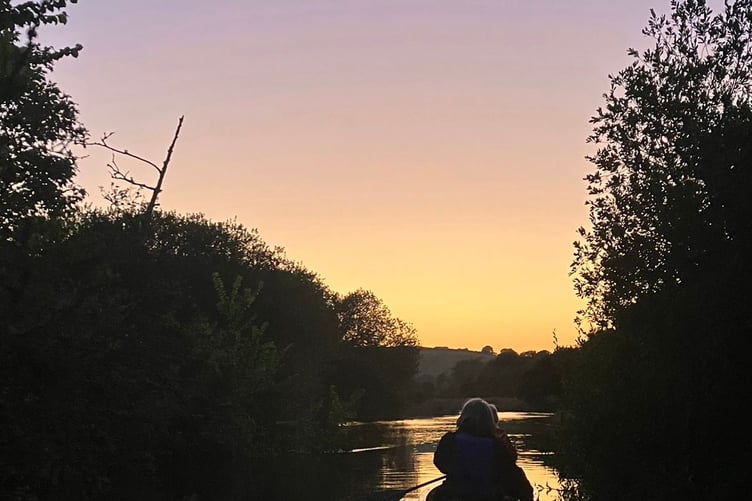
Continuing upstream the waterway narrows and trees and bushes start to encroach making a more intimate connection with the waterway. Eventually there is the sound of the weir and the manmade barrier to any further progress for the boater. Not so the animals as there is a salmon/trout pass and an eel ladder built on the weir to facilitate their movement.
Adult salmon, travelling from the North Atlantic, navigating by scent, move upstream to spawn. The eggs hatch and after a number of years the smolts head out to sea to grow, mature and hopefully return to spawn.
The European Eel (Anguilla anguilla), their life history was a mystery for thousands of years and even now mating in the wild has not yet been observed. After spawning in the Sargasso Sea, they disperse throughout the Atlantic Ocean and the rivers that empty into it. They grow in the rivers but before maturity they head back out to sea and mature on their way to spawn. Anguilla anguilla translates to eel or eel like.


After a visit to the weir, it’s a return, down stream and a visit to the Fisherman’s Friend for some excellent food and beer.
Comments
We've recently changed our login process. If you have an account for commenting, you will need to re-register on the login window.
This article has no comments yet. Be the first to leave a comment.