
When you are out on a walk in the countryside, how much do you notice? Really notice?
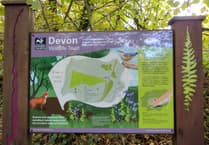
I am taking you back to South Brent and Lady’s Wood, a stone’s throw from The Glaze Brook and viaduct which spans its dancing waters, past the sign celebrating spring bluebells, dormice, and explaining that this was Devon Wildlife Trust’s very first nature reserve.
We have arrived.
Not having the best sense of direction in the world, especially in woodlands, I have learned to stop and take in my surroundings, noting any key features, landmarks, paths or distinctive trees. My family will confirm that I do tend to use trees and other botanical features as navigational aids, arguably, not the most reliable approach given both the seasonality and vulnerability of some of these choices. In this case, it was reassuring to confirm that the map on the sign was reflected in what I saw before me with the path diverging to left and right. Before Oli, my son, and I set off, I breathed in and listened. It was a still day with barely a sound from the trees; only the distant murmur of the brook and occasional melancholy warble of an unseen robin. A faint earthy, mushroomy scent hung in the air. There had been rain earlier in the week and although the temperature had begun to fall, I was optimistic that we would find fungi.
Near the entrance, beech mast littered the ground, creating a crunchy brown carpet. Beech trees form such a dense canopy that little light reaches the floor so it is often devoid of ground flora. Moving on, mature oak trees stretched up along the boundary edge, their canopies thinning noticeably as shortening daylight hours triggered chemical processes in the leaves: breaking down and reabsorbing chlorophyll to reveal the yellow and ochre pigments of autumn; causing cell walls at the leaf base to be degraded and sealed off, eventually releasing the dying leaf to drift to the ground. Standing in the shadowed interior of the wood looking up into the canopy had a similar feel to experiencing paintings by skilled artists on the ceiling of a great hall, with all the drama of glowing gold, bronze and brown contrasted against a cerulean blue sky.
It is a good job that Oli is very patient. As you can probably tell, a nature walk with me is unlikely to be quick.
Hazel is the main component of this woodland community and it was clear from each multi-stemmed ‘stool’ (the name for the woody tree base down to which the stems are cut) that Lady’s Wood has been traditionally managed by coppicing. Originally, this would have been for the wood products themselves but now this management is maintained by volunteers on a rotational basis to ensure that the habitat remains good for dormice. Primarily, this mid-layer of the woodland must have good connectivity so that dormice can traverse safely between trees. With numerous stems of honeysuckle twisting and twining throughout the canopy, a Tarzan-like treescape has developed for these acrobatic mammals and their nocturnal foragings. Rotational coppicing can provide a rich habitat for many species of both plant and animal as the environment cycles between open and light, and dense and shaded.



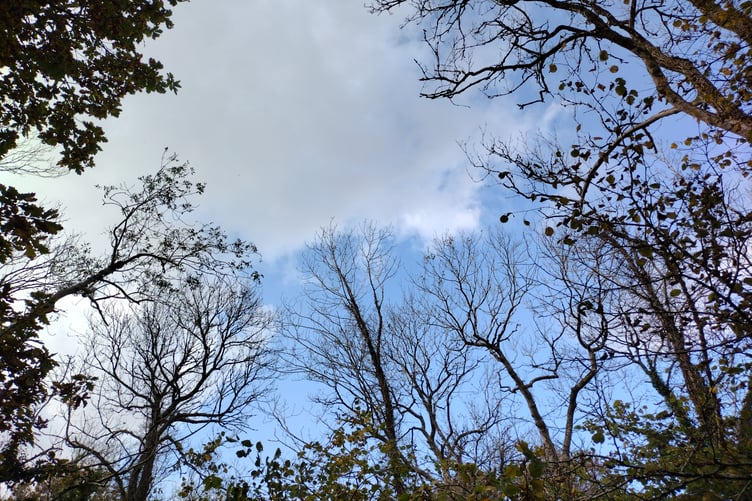
As we made our way back along the higher path, it became apparent that the upper tree canopy was missing a large component: our native ash. Great gaps of sky encircled by grey fingers of dead ash revealed the extent to which this woodland had been affected by ash-die back. I had noted that the disease was mentioned on DWT’s website but had not anticipated its devastation
across this small site. More often than not, I have seen signs of recovery in affected trees near my home but factors unknown have rendered these trees less resilient. In one area, the tangled heap of fallen ash trees draped with ivy looked like a giant collapsed tent. Oli pointed out how the ivy leaves on one tree near the path had not yet adjusted to their prone position, indicating that this was a very recent topple. I was relieved that it remained a windless day.
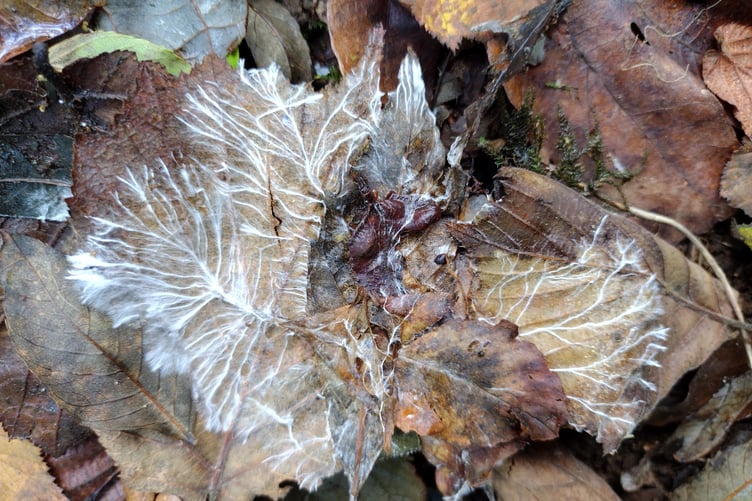
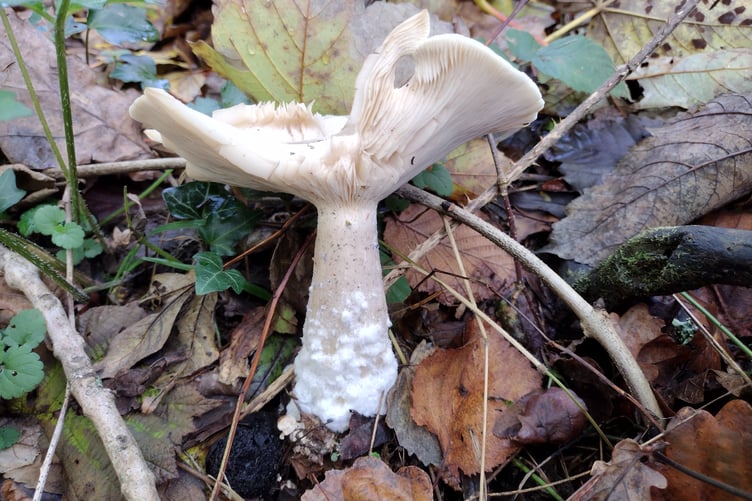
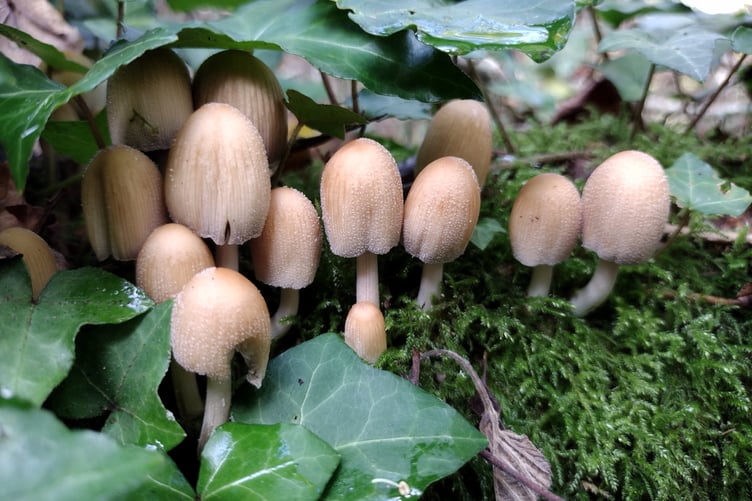
Fungi were not abundant but we did find some treasures: a row of miniature King Alfred’s cakes on one of the fallen trunks, a cascade of bracket fungi on a rotting stump, a large Clouded Agaric (alas, sadly kicked and damaged by a previous passer-by); and a cluster of tiny Coprinellus ink caps which looked as if they were sheltering under ivy umbrellas. Perhaps the most interesting discovery was an assortment of beech, sycamore and oak leaves stuck together like laminate and on the underside, a feathered tracery of mycelial threads, growing like white trees against a dark background - almost a photo-negative of the sky above
Comments
We've recently changed our login process. If you have an account for commenting, you will need to re-register on the login window.
This article has no comments yet. Be the first to leave a comment.