
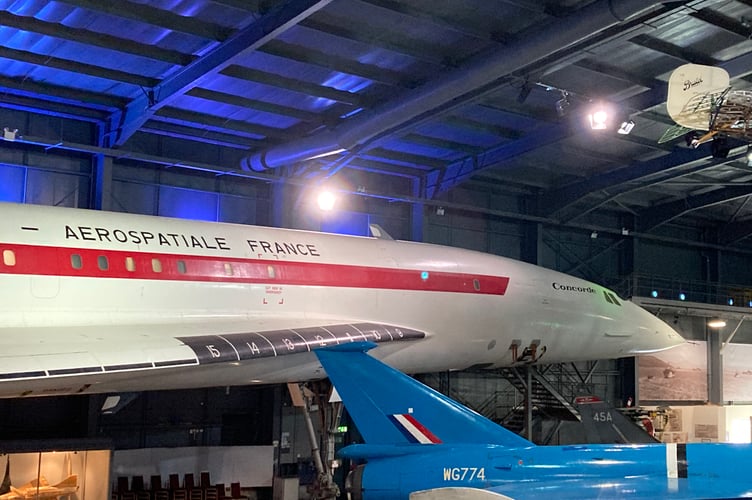
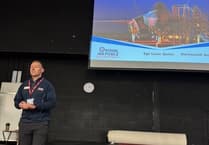
Th Thursday January 8 theres a chance to enjoy the ‘Reminisces of a Fast Lady” at The Flavel in Dartmouth
Dr Chris Coote an accountant of 10 years working on the design, development and flight testing of Concorde, the fastest passenger plane ever.
Concorde was a revolutionary Anglo-French supersonic airliner, famous for its dramatic delta wings, droop nose, and ability to cut transatlantic flight times in half by flying at Mach 2 (twice the speed of sound).
It offered a luxurious, high-speed experience for a small number of elite travelers between 1976 and 2003, using powerful Rolls-Royce engines with afterburners for takeoff and acceleration, but high costs limited its success.



A joint project between the UK and France, treaty signed in 1962; first flight in 1969, service began in 1976.
Constructed from aluminium, it was the first airliner to have analogue fly-by-wire flight controls.
The nose section could lower for better pilot visibility during takeoff and landing, a feature adapted from military jets.
Concorde had four powerful Rolls-Royce/SNECMA Olympus engines with afterburners (reheat) for takeoff and breaking the sound barrier.
The airliner had transatlantic range while supercruising at twice the speed of sound for 75 per cent of the distance.
Delays and cost overruns pushed costs to £1.5–2.1 billion in 1976, (£11–16 billion at 2023 prices).
The Concorde was retired due to economic viability issues, high operating costs, and the 2000 crash, with the final flights ending in 2003.
Out of the 20 Concordes built, 18 still exist, mostly preserved in museums across the UK, France, and the US, with some prototypes and development aircraft also surviving, though none are in active flight service due to high costs and operational complexities.
Many of these can be visited, though availability varies by location.
Coffee and chat at 10am with the talk starting at 10.30am.
Comments
We've recently changed our login process. If you have an account for commenting, you will need to re-register on the login window.
This article has no comments yet. Be the first to leave a comment.