
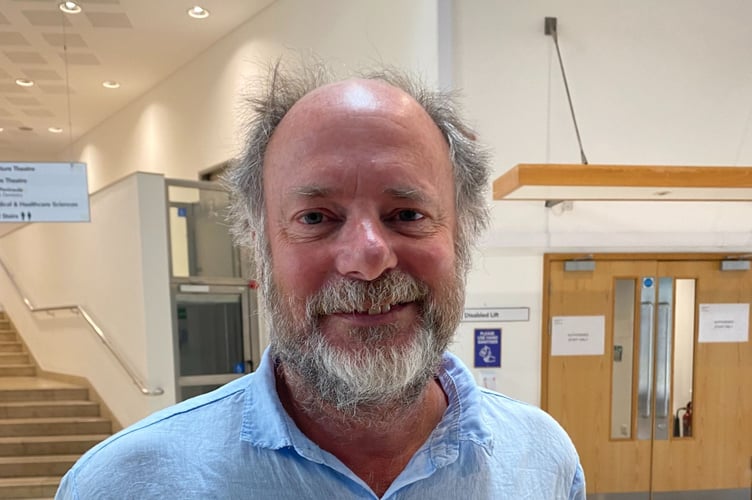
The natural environment was one of the reasons I got involved in politics. I have a degree in Zoology, and seeing the catastrophic decline in biodiversity, especially in this country, should worry us all. It’s good news that my colleague, Jacqi Hodgson, has just launched the county’s Local Nature Recovery Strategy (LNRS). This also includes Plymouth City and Torbay council areas. It’s taken on extra importance as the government appears to be cancelling environmental protection in favour of short-term economic growth. It’s easy to bulldoze a complex and crucial ecosystem in the blink of an eye. It can take years, sometimes hundreds, to replace.

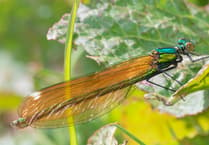
One of the main areas of attack on environmental legislation has come through the government’s planning reforms. I’m sure we’ve all heard of examples where excessive mitigation has been required to address environmental concerns. Rather than tear up the rule book, can’t we just ask that common sense prevail? The government’s obsession with house building seems to have clouded its judgment. They have swallowed the developer's line that extra housing is prevented by planning rules. At the same time, thousands of approved permissions are land banked until the financial climate suits the developers. Having sold off the family silver of public utilities and council houses, we now appear to be selling off the family estate to the highest bidder.
The LNRS is not regulatory, but it will give weight to arguments supporting nature recovery and protection. Planning is a balance between conflicting pressures. The more we can highlight the benefits of our natural environment, the stronger the case will be. With attempts to remove democratic influence on planning decisions at the local level, strategies and local plans must push the environmental agenda. Local councillors will no longer be involved in many decisions. These will be made by unelected officers guided by adopted plans. The LNRS will feed into these plans. Restoring habitats and contributing to halting wildlife decline strengthen ecosystems and bring many benefits. They store carbon, improve soil and water quality, and reduce flood risk, all of which contribute to climate resilience and, fundamentally, future sustainability. It also enhances access to high-quality natural spaces, supporting community health and wellbeing and opportunities for green skills and jobs linked to conservation and land management.
In the South Hams, the district council is already part of creating a new community woodland, Hope Wood in South Brent. With grant funding from DEFRA and support from the Woodland Trust and other community groups, we plan to have over 20,000 trees planted by the end of this year. I’m delighted to say that the council, again with DEFRA funding, has acquired another site just outside of Kingsbridge. It’s in its early stages, but the two projects will deliver over a hundred acres of woodland for the community to enjoy. While at the same time delivering our environmental goals.
I feel very lucky to be part of a team delivering such precious assets to our communities. No one makes you become a councillor, and it can be a thankless task, but achieving something that makes a difference makes it all worthwhile. I won’t be around to see these woodlands mature, but my grandchildren, who helped to plant some of the trees, will. In these troubling times, there is nothing more reassuring and beautiful than nature. We should and must do what we can to preserve and enhance it.
Comments
This article has no comments yet. Be the first to leave a comment.