

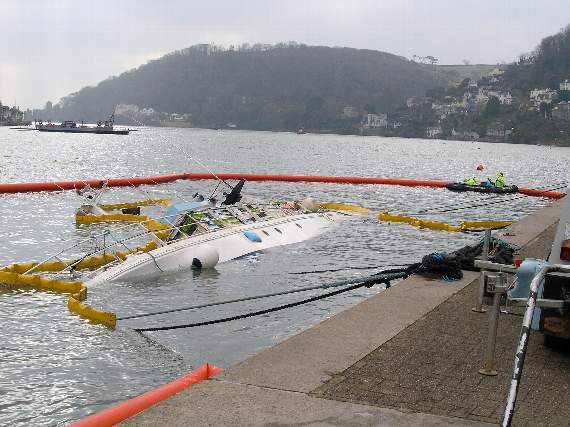
MANY questions still needed to be answered over the sinking of the French trawler in Dartmouth, according to harbour bosses.
Neil Hockaday, chairman of the Dart Harbour Navigation Authority, said he had confidence in the people who made decisions on the night.
But he accepted the harbour authority had to wait on the results of an inquiry into the incident by the Marine Accident Investigation Branch and that lessons may have to be learned, he told Dartmouth Town Council on Monday night.
Mr Hockaday was speaking just hours after it was announced harbour master Rob Giles had resigned.
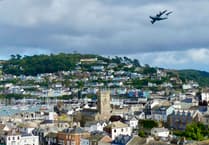
He said the disaster, where the Saint Christophe I ended up partially submerged on its mooring on South Embankment after seeking shelter in the harbour in March, was multifaceted in terms of what happened. High winds, low tides, why Brixham wasn’t able to offer a safe haven and language issues may all of contributed to her sinking and there were still questions outstanding.
‘The boats approached us and they asked for a safe refuge and I think my staff acted correctly in taking the boats in and there was no loss or injury or any of those seamen on board,’ he said.
‘People become experts later on. But they were offered locations which were at the time of entry, safe.
‘They were safe because it was full water and they had sufficient time therefore to work out what they wanted to do.’
Mr Hockaday said that ‘interestingly’ one of the French boats moved from the Town Jetty to the South Embankment.
But the boat that went down didn’t have a master on board, he said.
‘They were put on South Embankment and had some six hours to decided what was best for them,’ he said.
‘But, for whatever reason, the Saint Christophe I went down.’
He said it was uncertain if there had been anybody on watch or why the boat had filled with water.
‘And what were the five crew members on board doing when the boat was gently tipping over?’ he asked.
‘These are many questions we don’t know the answers to and have to wait for the Marine Accident Investigation Branch.
‘They will come out with a report within about six months and, if there are lessons to be learned, we will learn them. But we have to wait for that report to come out.’
Mr Hockaday said he accepted the incident had been a protracted problem for the town – with the smell of fish and diesel and environmental issues – but it had not been in the control of the harbour authority to right the vessel quicker.
‘If we had involved ourselves in any way with salvaging the vessel it would invalidate the ship’s insurance and the authority could have been seriously financially compromised,’ he said.
‘It was a terribly tragedy and people lost their jobs but they didn’t lose their lives.’
A spokesman for the Marine Accident Investigation Branch, which has launched an investigation into the grounding, capsizing and subsequent flooding of the vessel, said: ‘If any safety issues are identified, we may issue safety recommendations intended to prevent similar accidents in the future.’
Comments
This article has no comments yet. Be the first to leave a comment.