

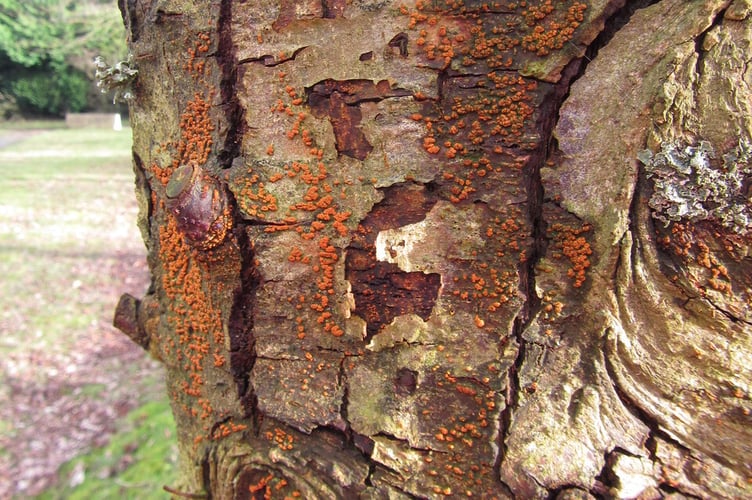
A highly destructive, necrotrophic fungus that attacks Sweet chestnut trees has been confirmed in Devon this week, triggering urgent action from the Forestry Commission to stop the disease from spreading.
In response to the outbreak, the Forestry Commission has introduced restrictions on the movement of ‘susceptible’ material in parts of South Devon. The measures are intended to contain the disease and reduce the risk of it spreading further.
Sweet chestnut blight is caused by the fungus Cryphonectria parasitica, which attacks the bark of European sweet chestnut trees. The fungus enters through fissures or wounds, spreading into the underlying tissue and wood and killing affected areas as it progresses. Trees infected with the disease typically display fissured or discoloured bark cankers, orange pinhead-sized fungal fruiting bodies, and buff-coloured fungal fans beneath the bark.
Although the disease has been found previously at a small number of sites in England, all of these are subject to statutory control measures. This latest outbreak is the first finding in 15 years in Great Britain of the fungus reproducing sexually. This means airborne spores are being produced, increasing the risk of wider environmental spread.



To limit the spread of the disease, a Demarcated Area has been introduced in South Devon, imposing restrictions on the felling, killing, and movement of sweet chestnut trees and other material capable of spreading the disease.
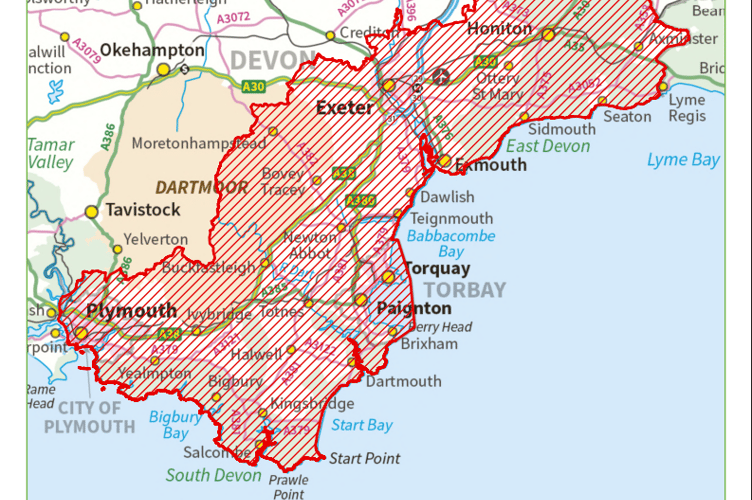
This includes a ban on moving plants for planting of the genus Castanea outside the demarcated area, as well as restrictions on moving sweet chestnut wood and bark both within and beyond the zone unless authorised by the Forestry Commission.
The Forestry Commission is working alongside the Royal Horticultural Society and Forest Research to raise awareness of the disease through the Check a Sweet Chestnut campaign. The public is being encouraged to look for signs of infection and report any suspected cases.
Professor Nicola Spence, Defra Chief Plant Health Officer, said: “The confirmation of sweet chestnut blight in Devon and the presence of airborne spores represent an increase in risk of the disease. We have acted swiftly and decisively to introduce restrictions to protect sweet chestnut trees across the country, and we urge anyone who suspects they have seen signs of this disease to report it immediately via TreeAlert.”
Andrea Deol, Forestry Commission Head of Plant Health Forestry, added: “We have moved quickly to introduce a Demarcated Area in Devon as sweet chestnut blight reproducing sexually has the potential to spread rapidly and over longer distances through airborne spores. We encourage woodland owners, land managers, tree nurseries, and members of the public to engage with the Check a Sweet Chestnut campaign to maintain biosecurity and prevent spread.”
According to the Forestry Commission, the disease is regulated in the UK as a Quarantine Pest and is not endemic, although it is widespread across Europe.
Further information, including guidance for landowners and updates on the Demarcated Area, is available on the Forestry Commission website.
Guidance on how to identify and report a blighted chestnut tree can be found here: https://tinyurl.com/5bhrdeat
Comments
This article has no comments yet. Be the first to leave a comment.