

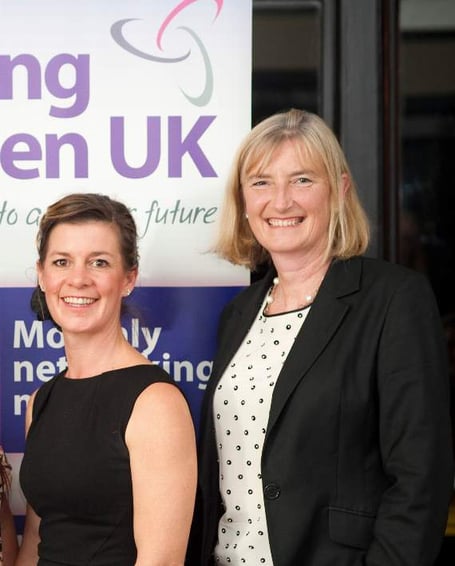
A former TV news presenter has spoken out about her own terrifying experiences in support a bid by MP Sarah Wollaston to tighten the law on stalking.
Alexis Bowater, who was a mainstay on ITV’s Westcountry Live for more than a decade, was cyber-stalked three separate times, leaving her in fear for her life.
The Stalking Protection Bill, a Private Member’s Bill sponsored by South Hams MP Dr Sarah Wollaston, aims to help protect people who are subjected to anonymous and online stalking.
When asked what the new Bill would do that a traditional restraining order would not, Alexis said: “This plugs the gap in regards to stranger stalking. Restraining orders are for when you know them, this provides protection when the stalking is anonymous.”



Alexis said that the third time she experienced stalking she was pregnant with her youngest child, and she went to the police “almost instantly”.
She said: “I had a good idea of the behaviour the final time and his first message to me was obviously violent. It read ‘I know where you live, be very afraid’.
“I was living in a house where the police had increased drive-bys, I had a Home Office-approved alarm installed and the next stage was the police talking about building a panic room, like in the movies. I knew it was a race against time between the police finding him and him finding me.”
He told her that she, along with her unborn baby, would be found hanged.
The stalking had started during her first pregnancy and had escalated. Her stalker twice claimed there was a bomb at the ITV studio where she worked.
The perpetrator was arrested weeks after Alexis gave birth and was eventually sentenced to four years in prison.
Talking about how it felt when she was told he had been arrested, Alexis said: “It was the first time I realised the level of stress I had been living under.
“It’s incremental, we get very British and take on a ‘Keep Calm and Carry On’ attitude, but you’re living under this level of threat. An attack has been promised, it’s imminent and inevitable, but you don’t know where, when or who by.
“Because they were anonymous, it meant that it could have been anyone, at any time – 24/7 you’re under threat, every year until they’re caught. That’s why so many stalking victims develop post-traumatic stress disorder, because you’re living in a state of hyper-vigilance.
“It was only at the point of his arrest that I felt like this weight had been lifted off me that I didn’t even know was there.
“I used to check my car and the back seat before I got it in, I was constantly checking my mirrors to see if I was being followed.
“It changed the way I lived my life and it changed the arrangements I made for my son.”
She told the Daily Mail in 2009: “I would lie in bed at night thinking, ‘Is this person going to kill me? Am I going to die?’
“I would be in an empty house with no husband around, and when you’re comforting a toddler in the middle of the night and you hear a creak on the stairs, it’s absolutely terrifying.
“I used to go to bed making plans of how I was going to get myself and my children out of the house if someone came in.
“It was terrifying. You wonder about the people driving in a car behind you and people in the street. Nobody knew who he was or what he looked like.”
Alexis said that when she first experienced stalking it was before the Protection from Harassment Act 1997, so there was much less that she or the police could do.
Luckily, through her job as a news presenter, she had a good relationship with the local police and went to them unofficially to explain what she was going through and received support.
The second time was a few years later and she was given a police escort home from the studio. This stalker was eventually arrested and jailed for a separate offence.
The Stalking Protection Bill has passed its second reading in the House of Commons, and will now progress to the committee and report stages before a third reading. If it passes through those procedures, it will go through the same process in the House of Lords, before becoming law.
Dr Wollaston introduced the Bill for its second reading on Friday, January 19.
She said: “There remains in the law... a serious gap when it comes to victims of what is known as stranger stalking, by which I mean those who are stalked by someone who is not a former or current intimate partner.
“Those victims of stalking do not have recourse to the protections available under the existing protection order regime. That is well recognised, which is why I think there is widespread support for the Bill.
“If we can step in at an earlier stage, perhaps we will have a better opportunity to prevent stalking before the behaviour can become so deeply ingrained.”
The Bill will move on to be examined by the Public Bill Committee, where detailed examination of the Bill takes place and the committee is able to take evidence from experts and interest groups from outside Parliament.
The date for this has not yet been announced.
Comments
We've recently changed our login process. If you have an account for commenting, you will need to re-register on the login window.
This article has no comments yet. Be the first to leave a comment.