
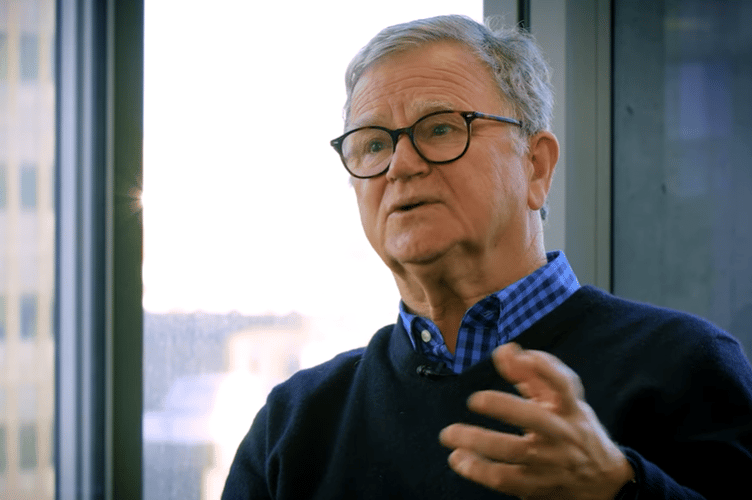
CHAIRMAN Simon Hallett says Plymouth Argyle are facing up to the mistakes that dragged them out of the Championship and left them clinging near the foot of League One.
The Green Army’s anger was impossible to ignore during last Saturday’s 3-0 loss to Northampton Town, with fans turning their frustrations toward the board, head coach Tom Cleverley and the squad themselves.
Now, Hallett has spoken directly. In a hard-hitting message released on the club’s official website on Thursday, he addresses the breakdown in trust, the criticism from the stands, and why he remains determined to put things right.
After publicly backing Cleverley at Monday’s fans’ forum – support reinforced by director of football Derek Adams – Hallett has now set out exactly why the club is sticking with its head coach during the toughest spell of his tenure.

Hallett said: "I wanted to follow up with a note to you all after the recent Fans’ Forum. It was a difficult evening for everyone involved - results have been poor, the club is under pressure and feelings are understandably high. The mood around Home Park reflects that, and I am not deaf to what is being said. I understand the anger. I share the disappointment.
"Just over a year ago, we were mid-table in the Championship. Today we are in a relegation fight in League One. That is a steep, rapid and painful change. There is no point pretending otherwise. Over the last 18 months we have made too many decisions that did not work. Some of the structures and processes that helped us succeed in previous seasons eroded. We changed too much, too quickly, on and off the pitch.
"Our summer recruitment did not give us the balanced, resilient squad we needed for this division. That is not down to one person. It is the result of collective decisions, and we are collectively responsible for fixing it. You asked how we intend to get out of this position. Some of the corrective work has already begun.
"We have a new Chief Executive in place. Paul Berne brings a clear focus on financial discipline and organisational structure, including in our football department. We have appointed Derek Adams as Director of Football, with responsibility for men’s football and recruitment, reporting to Paul.
"David Fox supports him, linking men’s recruitment, the Academy and wider footballing operations. Tom Cleverley remains Head Coach of the men’s first team and reports to Paul. That structure is simple, and clearer than it has been for a while.
"Recruitment will now sit firmly under Derek, with tighter processes to screen for the kind of players we need. We will return to the combination that worked for us: data to narrow the universe of players, live and video scouting, and experienced judgement about character and fit.
"Data are facts, not hocus pocus. Data analytics give a tool to support decisions and avoid human bias, not to substitute for judgement. Last summer we lost some of that discipline required to exercise good judgement. We will restore that discipline.
"Several of you questioned how it is possible to be in our league position with what we have spent. The facts are straightforward. We know we have the sixth highest budget in League One and we are not performing at that level. That gap between budget and results is the core problem on the football side and it is what this January and the longer-term work are aimed at correcting.
"There is already a plan in place for the squad changes we will seek to make. Derek and Tom are working to achieve our goals, but it will not be easy. In January, parent clubs have their own needs and most players are under contract, so deals involve both sets of clubs and the player rather than simply us and the player.
"The current budget allows for at least two additions, but that can change through outgoings, loan arrangements and, if justified, further shareholder support. We will use the loan market where it makes sense.
"There were also understandable questions about our five-year mission. The strategy has not changed. Our aim remains to be a financially strong club competing in the Championship. When I spoke publicly about Premier League aspirations, I described them as a stretch target. In hindsight, talking about that so openly, and so early, was an error.
"It always depended on securing substantial external investment, which we have not yet done. The goal of being a sustainable Championship club stands. The timeline will obviously need to be reviewed.
"It is, however, becoming more difficult to remain financially sustainable, even at a League One level. Across the EFL, costs (including player wages) continue to rise, and revenues are simply not keeping pace. This means that the vast majority of clubs in the EFL are incurring losses, which must be paid for in some way.
"Clubs seek to make profits from player trading, but many continue to rely upon support from owners and shareholders. The extent of losses in League One is greater than when we were last in this division, and so the challenge is becoming more difficult as each year passes.
"Poor recruitment has affected more than our league position. It has affected our financial health. As we showed at the Fans’ Forum in September, our model depends on buying well and selling well, supported by clear, data-led processes.
"That trading has been essential because we have made operating losses before player sales in five of the last six years, totalling almost £14 million. Those losses were partly covered by transfer fees and partly by shareholders.
"This year, with poor recruitment and fewer saleable assets, that trading is unlikely to be there. The result is that shareholders will have to cover a much larger share of the loss than in previous seasons. This is not sustainable.
"Investment was another major topic. As I said on the night, there is no new deal to announce. We have appointed an investment bank to act for us and to speak with potential investors. Interest is there, but there is also a queue - many clubs in England and across Europe are looking for new money or new owners.
"We will only accept investment from people who understand and support our values as a community focused, prudently run club and who are prepared to commit meaningful funds over several years.
"I was asked directly whether I would sell control of the club. The answer is yes, to the right party. My preference would be a phased process in which a new investor comes in as a minority shareholder, proves over time that our values and ambitions are aligned, and then takes a controlling stake.
"If the right person, with the right intentions and resources, wanted to buy a majority immediately, I would feel obliged to consider that seriously. What I will not do is hand the club over to someone whose approach would put its long-term future at risk.
"Some supporters remain unhappy that money has been committed to Foulston Park at a time when the men’s first team is struggling. I understand why that question is asked and I want to be clear about the facts.
"The funding for Foulston Park is shareholder money that was ring-fenced from the outset for that purpose. It was never available for transfer fees or wages. The choice was not “spend this on a striker” or “spend this on Foulston Park”.
"It was a choice by shareholders, including Jane and me, to invest in a long-term asset for Plymouth Argyle rather than put the same money into short-term spend on the men’s first team.
"We are building facilities there to a standard that would allow us to operate at Category Two level, should we decide to do so. That decision has not yet been made and will depend on an assessment of costs and benefits. What is not in doubt is the long-term purpose.
"Foulston Park will give our Academy and our women’s team a proper home, improve the development environment for young players, and, over time, support a pipeline of players for our first-team and for player trading. One big transfer every decade does not make the case on its own. A steady flow of Academy graduates into the team, and sensible sales, does.
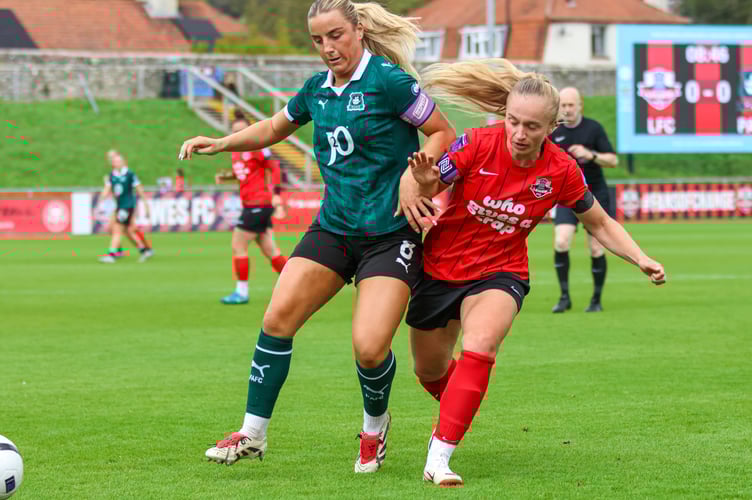
"The status of the women’s team was raised on the night. Having a women’s team as part of the club is important to us. The women’s team has its own audience and the women’s game is growing.
"It brings people to Argyle who may not otherwise come into contact with the club, and many of them go on to support us in other ways, from subscribing to Argyle TV to buying merchandise in the shop. Even more importantly, we are a football club, not a men’s football club.
"The net cost of the women’s club is around £200,000 a year. The club will lose millions of pounds this season. Not having a women’s team would not make a meaningful difference to that number, but it would take away something that is part of Argyle’s identity. It is on-pitch football with a growing following, and it reflects our commitment to supporting the game across the city.
"On finances more broadly, Paul set out the position at the Forum and I will not repeat every detail. This year will be significantly loss making. Costs are higher than forecast, some revenues are lower than projected, and we are now carrying the financial consequences of relegation.
"Shareholders, mainly me, are funding those losses through loans (on very cheap terms) and equity. The men’s first team squad budget is now roughly four times what it was when we were promoted from League Two into League One.
"Without that support from shareholders, and without the revenues generated by investments such as the Mayflower Grandstand, Higher Home Park, the GTs building and Harpers, the club could not operate at its current level.
"We cannot run on the basis that shareholders will plug this scale of gap indefinitely. Our goal has been sustainability. That goal has been ever harder to achieve as money has flooded into football and raised the cost of competing effectively, while costs outside of football have continued to rise sharply.
"Early next year, the club will undertake a thorough review of spending. The priorities are simple: protect and grow revenue streams that support football and reduce or stop non-essential costs that do not. The men’s first-team will remain the main focus of spend. We will be careful not to cut into the things that allow us to fund a competitive squad.
"There were also strong views expressed about Tom Cleverley. Some of you believe, very firmly, that he should be replaced. You pointed to his record at Watford, our current league position, and the pattern of results. You are entitled to that view.
"We have decided to back him and to support him. When we hired Tom, we chose a young, ambitious, highly-qualified coach who was prepared to commit to the club. He has been working with a squad that was not put together in the way any of us would have wished, with significant injuries and too much turnover.
"That does not excuse results, but it is part of the context. Derek has been clear, from his first days back, that Tom is strong on the training ground, clear in his coaching, and well regarded by players and staff.
"There were also questions about tactics and in-game management. We review those areas continually with Tom and his staff, and Derek’s arrival gives us another experienced voice in that process.
"Derek has managed more than 750 games and has come in as Director of Football to provide that experience to the club. He has seen in Tom someone who can succeed both tactically and culturally
.jpeg?width=752&height=500&crop=752:500)
"Changing Head Coach again would bring its own disruption and cost. It is not something we rule out in all circumstances. If we believed that making a change now would improve our chances of avoiding relegation, we would act.
"Right now we believe the best route is to keep Tom in post, to strengthen the squad and the staff structure around him, and to correct the weaknesses in recruitment processes that led us to this position. That is not a risk-free choice - but there is no risk-free choice.
"A number of questions on the night asked about injuries and discipline. Derek is reviewing training loads, previous injury history, and how we return players to fitness. We have had too many injuries, and we need to understand why.
"On discipline, we cannot afford avoidable suspensions. At the same time, players who compete on the edge will occasionally cross the line. We have to channel that aggression in the right way.
"Finally, I was asked what would happen if I simply walked away. It is a fair question in the current climate. The blunt answer is that, unless and until new investors are found, the club relies on shareholder support to cover operating losses.
"That is not a healthy position, and it is not one I ever wanted us to be in, but it is where English football has moved. Our job now is to reduce that reliance by running the club more tightly, protecting our revenue base and making better football decisions.
"Trust between the Board and supporters has been damaged over the last two years. I hear the chants and the criticism, and I do not pretend it doesn’t affect me. It does. But being hurt is not the same as being discouraged. I remain committed to this club, even when it is difficult.
"Trust is not restored by statements. It is restored by decisions that work and by performances that improve. We need to do better at both. You will not agree with every choice we make. You will judge us, rightly, on outcomes.
"What I can promise is honesty, transparency, and hard work - from me, from Paul, from Derek, from Tom, and from every member of staff.
"We all want the same thing - for Argyle to be successful again. We have made mistakes. We are fixing them. And we will do so without abandoning the values that have carried us from League Two to the Championship and built a club we can all be proud of.
Comments
This article has no comments yet. Be the first to leave a comment.