
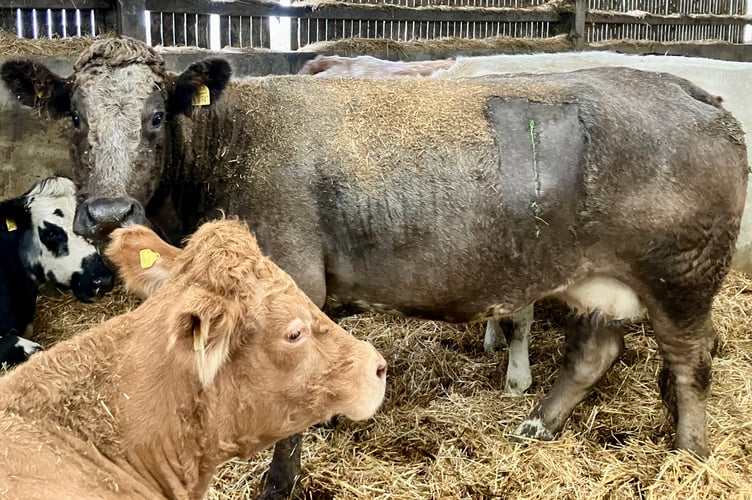
In the world of farming, not every birth goes according to plan. While most cows deliver their calves without complication, there are times when a birth becomes a serious challenge, requiring intervention to save both the mother and the calf. One such case recently unfolded on a local farm, where a cow needed a life-saving C-section to deliver a calf that was not only too large but also positioned incorrectly.
The Difficult Birth
C-sections in cows are not routine procedures but are sometimes necessary when complications arise during labour. In this case, the cow had gone into labour, but something was wrong. The calf was positioned backwards—known as a breech birth—making it impossible for it to pass through the birth canal naturally. To make matters worse, the calf was unusually large.
The birth was progressing normally at first, but when the farmer checked a couple of hours later he realised that the calf was backwards and too big to be delivered normally. The farmer called the practice and luckily, for once, it wasn’t the middle of the night! It was clear that a C-section was the only option.

-May--Adult-female-in-our-garden-June-(insets).jpeg?width=209&height=140&crop=209:145,smart&quality=75)
What is a C-Section?
A caesarean section, or C-section, is a surgical procedure in which the calf is delivered through an incision made in the cow’s abdomen and uterus. This is often done when the normal delivery process is impossible or too risky. C-sections in cows are typically performed when a calf is too large to pass through the birth canal or when it is positioned in a way that prevents a safe delivery. In cows, this is done with them stood up, using medicines to stop them feeling pain and keep them quiet.
While not common, C-sections are a critical tool for farmers and vets to optimise the chances of survival of both the calf and mother. It’s a high-risk procedure, requiring experienced professionals, as there’s always a risk of complications, such as infection or excessive blood loss.
The Procedure
On arrival at the farm, we secured the cow with a halter in the shed and gave her sedation to keep her calm. Local anaesthetic was used in her side so she didn’t feel anything and she was given pain relief and antibiotics before the surgery. She was then clipped and scrubbed for surgery. We give antibiotics for these surgeries as although we try to make the area as sterile as possible, we are still operating in a shed! After making a careful incision in the cow’s side, we removed the calf alive and the farmer helped to clear the airways.
The calf was large; about 70kg: much more than a typical newborn calf. Thankfully, it survived the surgery and was able to start breathing on its own immediately after being delivered. The uterus, muscle and skin of the mother was stitched up.
While C-sections are not without risks, this particular operation ended successfully, with both mother and calf recovering well.
Comments
We've recently changed our login process. If you have an account for commenting, you will need to re-register on the login window.
This article has no comments yet. Be the first to leave a comment.