
I love early spring. Like most of us, I get tired of the cold, wet, grey winter weather but for me there is a special reason to look forward to the first sunny days: insects! It is time to dust down the camera and start on a new season of observing and recording.
Insects fascinate me. I have spent years with my nose in the vegetation looking for tiny creatures to photograph and then hopefully identify when I get home. Having settled down in Kingsbridge quite recently, I was keen to find somewhere to visit on a regular basis and that turned out to be the Community Garden.
Located at the top of Fore Street next to The Ark at Tresillian, it is a wonderful mixture of traditional garden and happy wilderness. Surprisingly, it is not widely known in the community although it offers a perfect place to enjoy a quiet picnic lunch, sit in the sun or join the volunteers who tend the garden. Or look for insects!


The first butterflies always make a welcome appearance when the days warm up. These are species such as the Peacock and Small Tortoiseshell, which hibernate in garden sheds, hollow trees or deep in the ivy. I didn’t see any Small Tortoiseshells last year or the year before so this year’s sighting was very special as the species has been declining in the south in recent years. Another beautiful sight in spring is the male Brimstone, a large sulphur-yellow species which also hibernates. My personal favourite has to be the Peacock, beautifully coloured and a joy to watch.
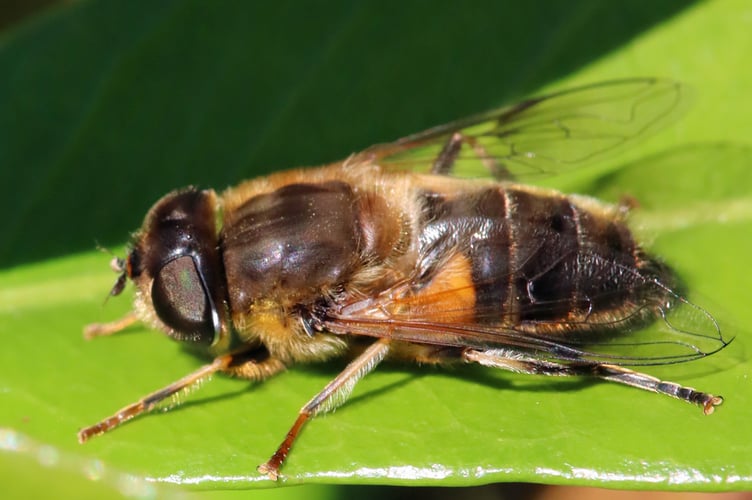
The early sun also brings out the first hoverflies. These can be very deceptive in appearance: quite a few look like bees and quite a few look like wasps. Amongst the bee mimics, the first to appear are the drone flies. These are fairly large brown hoverflies and are often found sitting in the sun or feeding on the spring flowers. They are excellent pollinators and can easily be encouraged to breed in your garden. Just as you provide nestboxes for the birds, you can provide a hoverfly lagoon, as it is called, for the larvae of drone flies. All you need is a container with some stagnant water and organic material in it. You can easily find a more detailed description online. Not only are hoverflies excellent pollinators, many are important predators of aphids when they are in the larval stage.
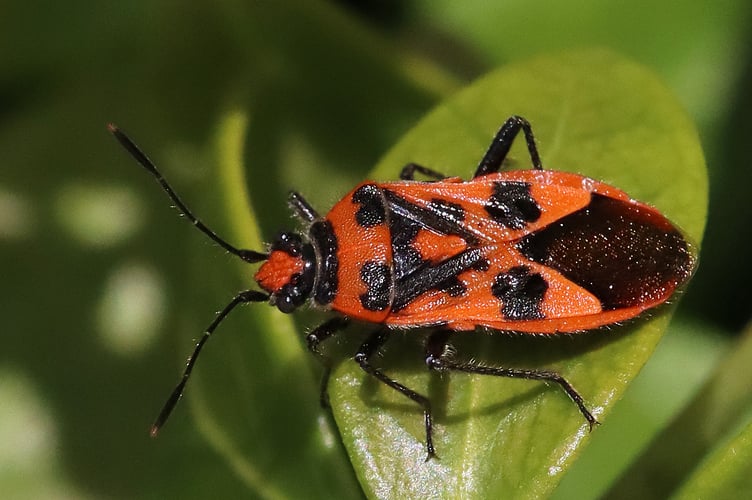
And then there are the bugs, by which I mean the so-called True Bugs or Hemiptera, to give them their proper name. Superficially similar to beetles, one of the main differences is that bugs do not have jaws. Instead, they have a rostrum, which is a sort of tube through which they suck plant sap. Not all are vegetarian and they are quite fond of caterpillars and a host of other small insects. I have a soft spot for bugs. Some, like the larger shieldbugs, can be very photogenic, while others flee at the slightest movement and would try the patience of Job.
There are some very interesting species in the garden: last year I found at least three species which may qualify as nationally scarce and I would love to find out if they are still present this year.
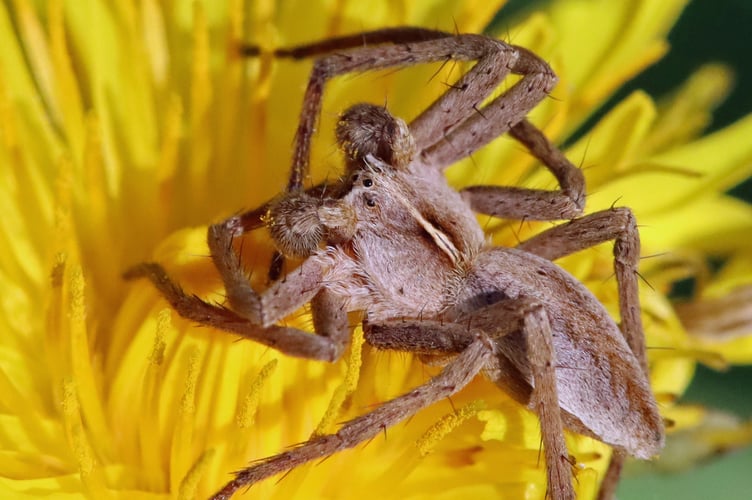
Wherever there are lots of invertebrates, there are bound to be spiders and the Community Garden is no exception. There is a wide range of potential habitats in the garden and that means all sorts of spiders. The improvement in the weather brings out large numbers of wolf spiders and Nursery Web Spiders. The latter bask on top of leaves and are easy to find. Zebra Spiders live on sunny walls and fences – they don’t have webs but actively hunt their prey, localising dinner with their phenomenal eyesight and then jumping on top of it.
This is only a tiny fraction of the wildlife in the Community Garden and there is so much more to discover. What about the newts, the slow worms, woodlice, ladybirds, birds, moths and everything else that deserves a mention? You could spend a lifetime there and only scratch the surface. Hunting insects isn’t just fun: all my records are uploaded to a national database. There are a number of platforms and recording schemes online but my site of choice is iRecord. Insect numbers have been dropping alarmingly in recent years and any information we can gather about them is important.
The garden is open to visitors from 9am to 5pm on weekdays and from 10am to 4pm at the weekend. If you would like to volunteer, please come along on Friday morning or get in touch via Facebook.
Comments
This article has no comments yet. Be the first to leave a comment.