
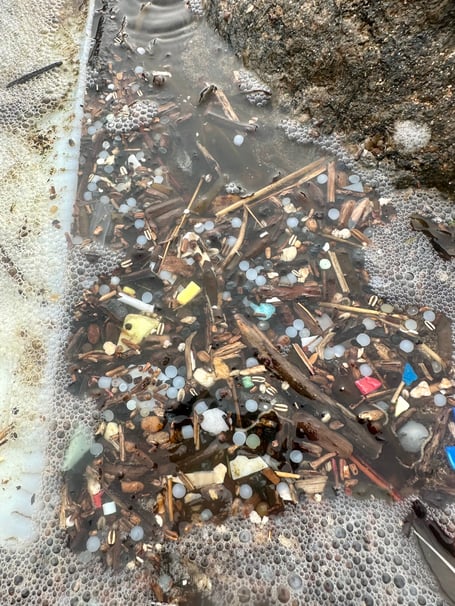
On recent beach cleans in the South Hams volunteers have witnessed a noticeable increase in the number of dead puffins and other sea birds amongst the ever present plastic pollution on the strand-line, this is not unique to our stretch of coastline unfortunately, with similar reports coming in from all around the UK coast. In this case however it is not the plastic that’s to blame directly but a result of the frequency and severity of the the seasonal storms we have endured this Winter, it is not a new phenomenon, and even has a name having been dubbed a “Seabird Wreck”.
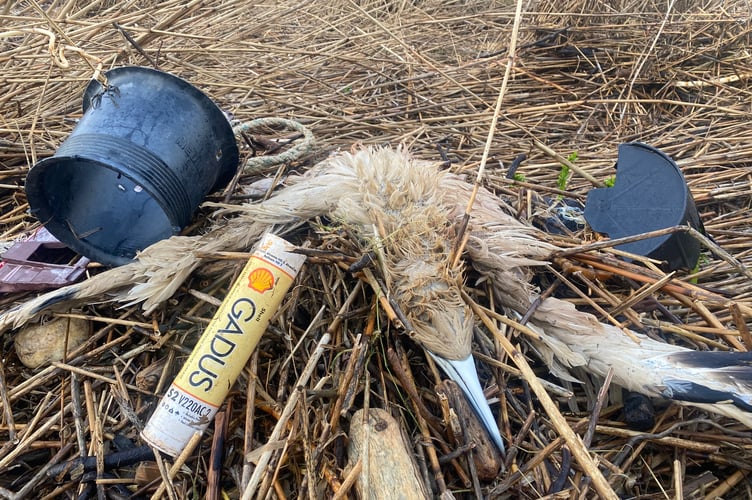
Seabird Wrecks are caused by a prolonged period of storm activity stirring up the sea bead, reducing visibility to the point that many sea bird species are unable to see their pray underwater leading to starvation. Whilst climate change is irrefutably driving the increase in regularity of these events, a slither of good news is that it is currently seasonal and populations will have the opportunity to recover in-between cycles.
This is where the omni present nature of plastic pollution comes into focus as whilst the winter storms do definitely stir up historic pollution from the seabed making it appear seasonal, in reality there is no let up in the assault on nature from plastic whatever the time of year.


The effects of plastic pollution on the planets flora and fauna is an area of relatively new study, however, we all live with plastic pollution in some form or another, recent scientific peer reviewed studies having shown that it resides in each and everyone of us! It is not, as you might expect, necessarily ingested via what we eat, but rather from the very air that we breath in the form of microscopic nano particles invisible to the naked eye.
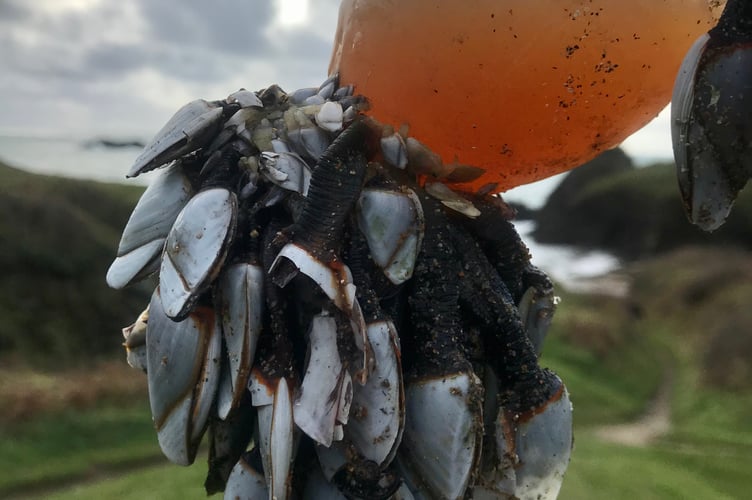
What effect this will have long term on human health has yet to be determined, however, I don’t think you need a Phd to conclude that it is unlikely to be beneficial.
Nature is under enormous pressure from all sides, a warming planet, habitat loss and the pollution of soils and waterways with one of the most strikingly visual forms of everyday pollution being plastic pollution.
I challenge anyone to go for a countryside or coastal walk and not encounter litter in the form of plastic in some form or another and I would argue that it is definitely having a hugely detrimental effect on the creatures that we share our planet with.
In order to make this relevant, let’s take the Salcombe & Kingsbridge estuary (Ria) and nearby coastline as an example. If you are fortunate enough to be able to navigate the waters of this beautiful place and you stick to the well defined deep water channels, generally it all looks tickety boo.
Take a closer look however, and it is far from so. Micro plastics in the form of nurdles, bio beads, polystyrene balls and unidentifiable fragments inhabit every nook and cranny of almost the entire perimeter of the estuary, consider that this measures some 49kms (31 miles) then you get some idea of the scale of the issue.
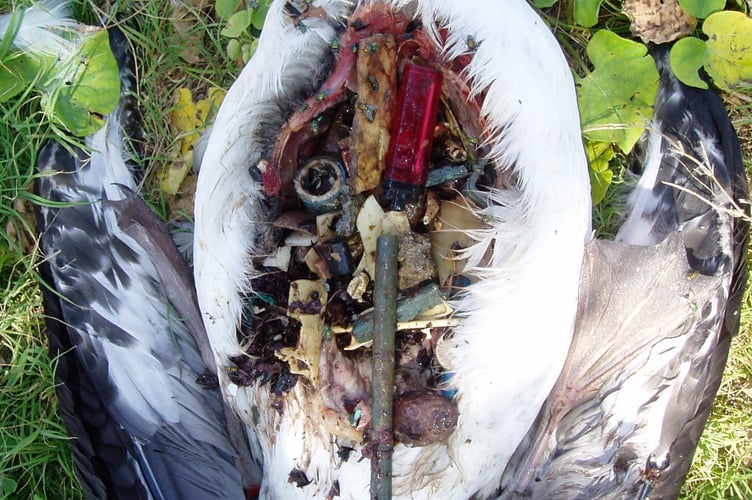
Nano and micro plastics are ingested mistakenly as food by sea birds and sea creatures of all shapes and sizes much more commonly than land based equivalents. The jarring image of the Laysan Albatros chic with its stomach full of plastic pollution unwittingly fed to it by its parents who take their food from the ocean surface whilst on the wing is hideous proof of this.
It was an image like this that was one of the catalysts for the establishment of the South Devon based plastic pollution and nature regeneration organisation Till the Coast is Clear which specialises in clearing plastic pollution from the less accessible areas of the coastline, since 2018 some 35,000kgs have been recovered by hand by the crew and volunteers of the social enterprise that has been supported the Devon Environment Foundation and numerous other organisations and local business sponsors.
So who’s problem is this? Well, it is a problem for all of us, plastic is a ubiquitous material that it is difficult to see humans replacing anytime soon without the will of our leaders and the manufactures who maintain that it is consumer demand that drives its proliferation, not the fact that it is cheap to produce and phenomenally profitable. Viable alternatives are already out there and if produced at scale could easily make this transition a swiftly viable reality.
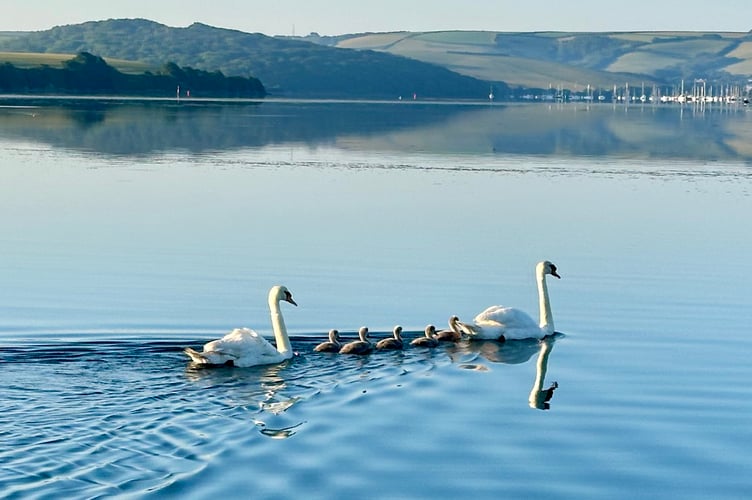
Getting into the sources of plastic pollution is beyond the scope of this Nature Diary but it is undeniable that it is a growing issue that needs to be addressed at a political level, in the mean time, as consumers we can change our habits, use less of the single use stuff and vote with our wallets and purses and reward those eco entrepreneurs trying to put a dent in the established, business as usual, profit before planet and people behemoths that currently dominate the production and heavy marketing of the material.
Plastic is one of the main materials that define the period now defined as the Anthropacean broadly accepted to be from the 1950’s onwards when our impact on the planet became part of the fossil record, plastic and other “techofossils” such as concrete and fly ash from coal burning being other examples.
If you would like to learn more about the plastic pollution recovery and nature regeneration projects initiated by Till the Coast is Clear please visit www.tillthecoastisclear.co.uk.
Comments
We've recently changed our login process. If you have an account for commenting, you will need to re-register on the login window.
This article has no comments yet. Be the first to leave a comment.