
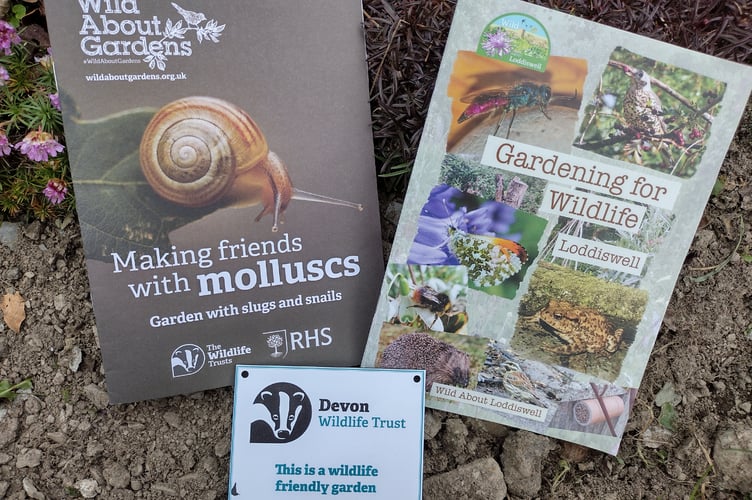
How well are you doing with your wildlife gardening? I recently completed a checklist to find out after visiting Modbury Wildlife Action Group’s Naturefest last summer. My primary purpose was to collect equipment from the Devon Wildlife Trust stall for one of our Loddiswell nature activity days and whilst doing so, noticed a ‘Wildlife Garden Award’ leaflet. Hetty, from DWT’s Wilder Communities team who was running the stall, encouraged me to take one home and fill it in online.
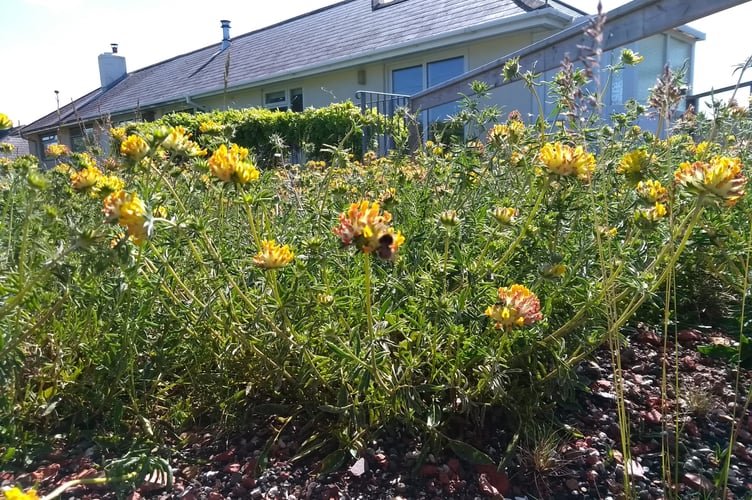
There were so many categories, it did take a while but I found it a most rewarding exercise, thinking about what we had already put in place and flagging up things we could still do. One of the final questions asked if there was anything I was particularly keen to highlight, and whilst really pleased with the hedge restoration on our boundary banks (featured in my last Nature Diary), I focussed on the investment we had made in installing a green roof as part of a building extension project in 2020. It was created from a layered series of: thick, protective felt over the sealed roof; followed by dimpled, water-retaining modules; overlain with thin, permeable sheets; covered with a lightweight, porous substrate; and finally seeded with drought-tolerant coastal and meadow species. Not only has become one of the most botanically-rich parts of the garden, attracting pollinating insects, grasshoppers and butterflies, it also plays a significant role in rainwater management, slowing runoff in storm events; it also moderates the temperature inside the building below.
A few weeks later, I was delighted to receive a lovely letter and a DWT ‘This is a wildlife-friendly garden’ plaque! They also sent me a ‘Making friends with molluscs’ booklet as I hadn’t made much mention of slugs and snails in my submission. This was largely because I thought that if I told them that my control method of choice was to roam around the garden after dark, armed with a head-torch, jar of cider and ‘spoon-of-doom’, scooping up the slugs and snails in my ornamental, salad and vegetable beds and depositing them into the jar for a drunken demise before being consigned to the compost heap, then they would think I was completely bonkers. Slugs and snails are welcome in other parts of our garden where they provide food for slowworms and foraging hedgehogs; also, ground beetles, amphibians and song thrush too. If you are fortunate enough to have glow-worms in your area, their larvae hunt and predate them in a delightfully gross manner. Look this up if you enjoy a juicy horror story.



-and-new-wooden-brackets-hopefully-for-house-martin-nests.jpeg?trim=153,0,119,0&width=752&height=500&crop=752:500)
Slugs and snails can be one of the main reasons that gardeners still turn to chemical solutions to protect their precious plants, undoing so many of the good intentions of hedgehog homes, log piles, home composting and other positive actions. Many wildlife-friendly approaches are only mildly effective at best and wasted effort at worst - so disheartening when you see your pricey pot of luxuriant, bee-attracting Salvias reduced to munched mush overnight or your carefully nurtured runner bean seedlings vanish as if you had dreamt them. Instead, talk to your neighbours and find out which plant varieties tend to be left alone, grow seedlings on to a larger size before planting out, companion plant with strong-smelling herbs and alliums, and use cloches for vulnerable salad crops. Learn from your losses and get to know your garden molluscs, identifying them with a field guide or mobile app such as iNaturalist. Find out how they benefit the ecosystem and aim to foster respect for these nocturnal and mysterious, slimy creatures.
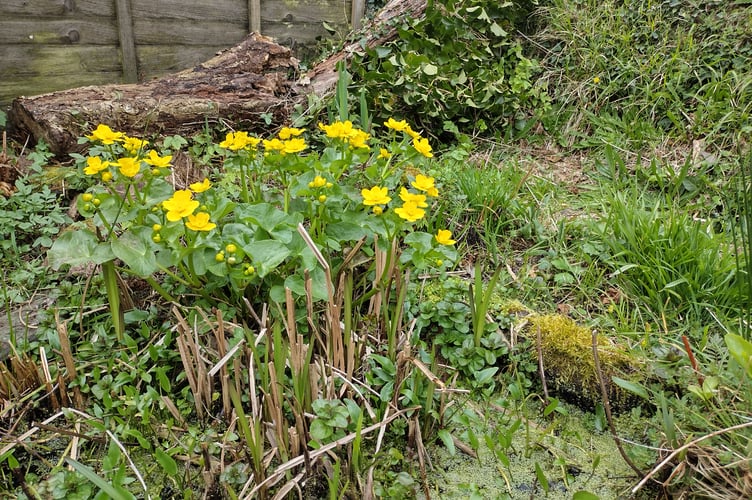
And so, to the checklist: have you… planted strategically to encourage pollinators throughout the year; provided shelters for minibeasts, amphibians, reptiles and hedgehogs; set up sources of water for both birds and ground-dwellers; put up nest boxes for different bird species; planned to leave areas of long grassland to flower and set seed; created wildlife corridors for safe passage and shelter; installed a pond, a bog-garden, a compost heap? The list goes on! Happily, there are fantastic resources available through the many wildlife organisations we have in the UK; also through the long-established and highly respected institution of The Royal Horticultural Society. I have often referred site managers and other clients to their ‘Perfect for Pollinators’ plant lists.
As you welcome your garden back to life over these coming weeks, I commend to you the work of The Habitat Group (www.thehabitatgroup.uk), an initiative of motivated people from different parishes around the South Hams. They have produced an excellent ‘Gardening for Wildlife’ booklet which they can reprint and customise for distribution around other parishes. It is filled with information, photographs, tips and best of all, ‘Can-do
Checklists’ – all created by local people for local people. It is on their website too so take a look!
Comments
We've recently changed our login process. If you have an account for commenting, you will need to re-register on the login window.
This article has no comments yet. Be the first to leave a comment.