
A long-promised government Water White Paper has been published, setting out a blueprint to overhaul how water is regulated in England.
For households in the South Hams — long frustrated by poor infrastructure, pollution and repeated failures by South West Water — the document signals potentially positive change. However, it also raises questions about whether it will deliver tangible improvements for consumers.
The government argues the current system has allowed a culture of water companies effectively “marking their own homework” by monitoring and reporting on their own performance. Meanwhile, ageing pipes, treatment works and sewage systems have been allowed to deteriorate.
The White Paper aims to end that approach by creating a single, integrated regulator with new powers to act earlier and more decisively. Under the proposals, the current patchwork of bodies — including Ofwat, the Environment Agency and the Drinking Water Inspectorate — would be consolidated into one authority.


-Cleared-for-use-by.jpeg?width=209&height=140&crop=209:145,smart&quality=75)

A Chief Engineer would lead hands-on inspections and technical oversight, replacing a system in which firms largely assess their own infrastructure. The emphasis would shift from reactive fixes to preventative regulation, with inspectors carrying out unannounced “MOT-style” health checks on pipes, pumps and treatment works to identify vulnerabilities before they result in service failures or pollution incidents.
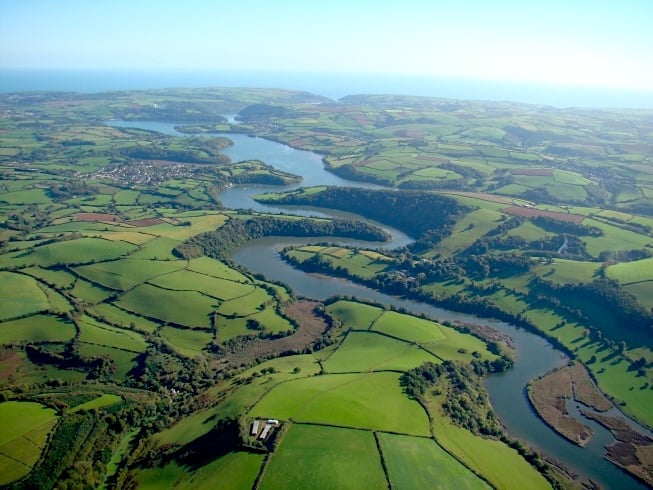
The White Paper also proposes a new Performance Improvement Regime, giving regulators faster powers to intervene where companies fall short. For South Hams residents, this promises greater scrutiny of infrastructure health, potentially reducing the frequency of bursts, outages and the discharge of sewage into local waterways such as the Dart and the Kingsbridge Estuary.
Furthermore, the creation of a Water Ombudsman with legally binding dispute-resolution powers is intended to give households a clearer route to challenge poor service or unfair billing.
In a move to future-proof supply, the paper confirms the government is “fast-tracking” the construction of nine major new reservoirs by 2050. While none are planned for the South Hams — the closest being in Somerset — they are intended to form part of a “national resilience” grid. With 1.5 million new homes promised by 2029, the aim is to reduce pressure on regional systems and avoid resources being diverted away from South West infrastructure.
However, there are caveats. The White Paper is a policy blueprint, not new law. Its proposals will require a future Water Reform Bill and a transition plan before they take effect, meaning improvements to locally managed infrastructure may still be years away.
Concerns have also been raised about the emphasis on competition and third-party investment. While this may attract capital, critics warn it could incentivise lowest-cost contracts over quality workmanship — a pattern seen in other sectors.
Perhaps most controversially, the paper proposes a “turnaround regime” for under-performing companies, which could involve deferring or managing pollution fines to protect financial stability while improvements are made. Environmental groups warn this risks weakening accountability if penalties are seen as negotiable rather than guaranteed.
This White Paper represents one of the most ambitious attempts in decades to reform England’s water sector. It is bold in vision, but will require political will and careful implementation to deliver on its promises.
For the South Hams, the document offers a clear acknowledgement that the current system has failed. It is a reassuring first step, but whether it brings real change on the ground remains to be seen.
Comments
This article has no comments yet. Be the first to leave a comment.