
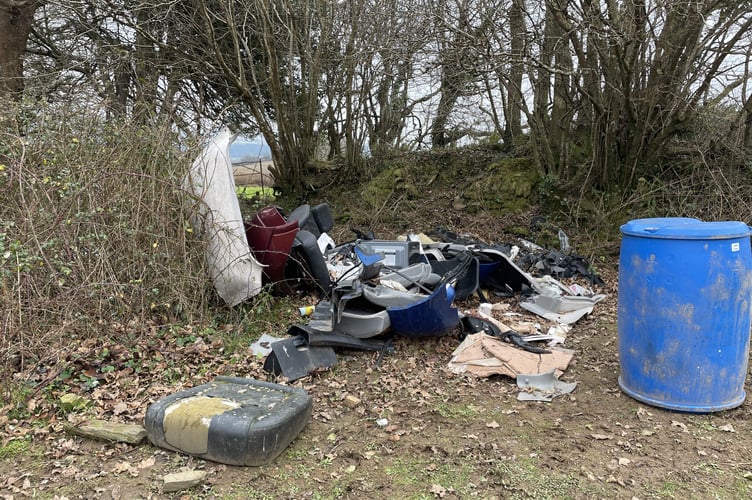
The South Hams comes in seventh place in the South West for hazardous fly-tipping hotspots.
Data from Devon waste management experts at BusinessWaste.co.uk shows that in the year 2024/25 there were a total of 662 incidents and 21 hazardous incidents with 3.17 per cent of the incidents being hazardous which equates to 2.28 hazardous incidents per 10,000 people.
The South West ranks sixth in England’s hazardous fly-tipping hotspots.
Overall, the region saw 1.42 incidents per 10,000 people on average, around 1.51 per cent of all fly-tipping incidents classed as hazardous waste.



In comparison, London took the top spot with 2.68 incidents per 10,000 people, and the North East sits at the bottom of the table with just 1.05 incidents per 10,000 people.
Mark Hall, Devon waste management expert at BusinessWaste.co.uk, said: “All illegal waste dumping is damaging to the environment and local community, but hazardous waste is particularly concerning as it contains toxic, persistent, or reactive materials. Substances such as asbestos, oils, chemicals, and fuel are not only more toxic but also often require specialist handling and disposal. When dumped illegally, they can contaminate soil and water, release harmful particles into the air, and create safety risks for both the public and council workers.
“As hazardous waste disposal can be more expensive and logistically complex, this sometimes leads people to fly-tip this type of waste to cut costs or time. Incidents can be down to individuals or linked to rogue waste operators who are paid to remove materials but then instead dispose of them illegally to cut costs and maximise profit.
“If you come across any kind of fly-tipping, keep your distance, don’t disturb it, and immediately report it to the council, who will be able to assess the material and dispose of it appropriately.”
Comments
We've recently changed our login process. If you have an account for commenting, you will need to re-register on the login window.
This article has no comments yet. Be the first to leave a comment.