
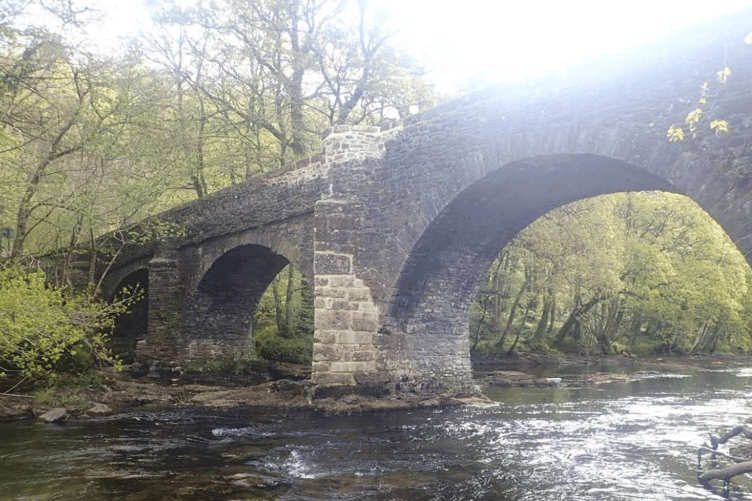
Two planning applications have been submitted to South Hams District Council seeking Listed Building Consent to install steel protection plates on two historic crossings over the River Dart.
The proposals target the Grade I listed Staverton Bridge near Dartington, which dates from the 15th century, and the Grade II listed Austins Bridge near Buckfastleigh, constructed in the 17th century.
Both structures have faced severe wear from debris in recent years.
According to the design and access statements submitted by Devon County Council, increased storm frequency, regional Ash Dieback, and a lack of riverside maintenance have resulted in large trees repeatedly being swept downriver during high water.


.png?width=209&height=140&crop=209:145,smart&quality=75)
This debris builds up against the upstream cutwaters - the wedge-shaped stone piers designed to split the river flow - causing significant erosion to the historic mortar and stonework.
During Storm Dennis in 2020, a drifting tree caused structural damage to two cutwaters at Austins Bridge, leaving sections suspended and necessitating emergency propping and extensive repairs.
Managing this debris has become a recurring financial and logistical challenge for local authorities.
Annual clearance efforts over the past five years have required costly road closures and disrupted residents. Specialist diving teams have also been required on multiple occasions to assess sub-surface masonry damage or remove otherwise unreachable debris.
To mitigate future structural risks, the applicant proposes fitting 10mm thick, angular steel plates - known as nosings - to the points of the river piers.
The submitted documents say the project will involve reinforcing six cutwaters at Staverton Bridge and four at Austins Bridge.
Each 300mm wide plate will be secured directly into the centre of individual stones using 16mm steel bolts, with a matching lime mortar mix packed into any flush gaps to prevent water or debris ingress behind the armouring.
Addressing potential heritage concerns, the statements clarify that the steel plates will remain unpainted, allowing them to “weather and patinate naturally” into the river environment.
The nosings will be positioned to face upstream and will remain largely submerged under typical river levels, meaning they will not be easily visible from standard public viewing areas.
Devon County Council engineers and conservation advisors have reviewed the scheme and indicated that the long-term structural preservation benefits to these heritage assets outweigh the minimal visual impacts.
Find out about planning applications that affect you by visiting the Public Notice Portal.
Anyone wishing to make representations on the planning application for Steverton Bridge (1644/26/LBC) or Austins Bridge (1646/26/LBC) should do so by July 23, 2026.
Comments
This article has no comments yet. Be the first to leave a comment.