
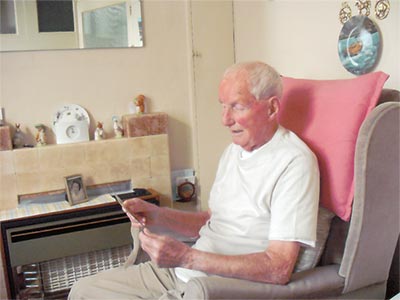
A veteran has been recalling a Second World War tragedy which saw 78 British sailors killed and another 149 wounded in a friendly-fire disaster in the wake of D-Day.
The men died when a minesweeping operation off the French coast went horribly wrong and the British flotilla was attacked by their own air force.
Three ships were sunk and a fourth left a floating wreck following the air attack by 16 Typhoons and 12 Spitfires in August 1944.
Able Seaman Graham 'Pip' Williams should have been part of the flotilla but his own ship, HMS Gleaner, had been damaged by a mine the day before and was laid up in a French port.



But he and his shipmates could hear the horror of the attack over the ship's radio as it was happening, Mr Williams, now aged 87, revealed.
The seaman and his comrades were sworn to secrecy following the tragedy which resulted in a court martial conviction.
Just a week before Mr Williams and the rest of the nation remembers the nation's war dead, he revealed: 'We were sworn to secrecy and we never talked about it.
'Even when I came home and came out of the Royal Navy I never talked about it.'
Mr Williams, who lives in Mayors Avenue, Dartmouth, was called up into the Royal Navy when he was just 19 years old.
He had served in the navy for only a few months before he became part of the minesweeping operation off the French coast following the D-Day landings.
Later he would sail with HMS Gleaner alongside the Arctic convoys, taking vital supplies to Russia.
But in August 1944 he was part of the minesweeping flotilla clearing the seas of mines working out of the French port of Arromanches.
On August 26, his ship was damaged by a mine and had to be towed back to Arromanches before eventually heading back to England for repairs.
The next day the rest of the flotilla went back out sweeping the same area when the Typhoons armed with rockets and cannons – backed up by the Spitfires – launched their attack.
The Wing Commander in charge of the squadron reported he believed the ships were British but was told to press home his attack.
Britomart, Jason and Hussar were all sunk and the Salamander left a floating wreck. Survivors were rescued by two trawlers and an RAF rescue launch but 78 officers and men were killed and 149 wounded. An inquiry later blamed naval HQ for the disaster.
Mr Williams said: 'We were on board Gleaner and the man in the wireless office could hear it all. He was giving us a running commentary on what was happening.
'If we had not been damaged it would have been us.
'When we were operating we were all together, almost side by side. At the time you didn't know what to think. You couldn't do anything about it.'
After being demobbed from the services in 1946 Mr Williams joined his father Thomas running his pleasure boat operation on the Dart from Dartmouth to Totnes and later took over the business himself.
But, he said, even after the war he never spoke about the tragedy that could so easily have claimed his life as well.
Comments
This article has no comments yet. Be the first to leave a comment.