
Dartmouth's Ford Valley leat is still not dry – despite a £228,000 council scheme to divert the water underground and demolish the Victorian 'aqueduct'.
Now Ford Valley road will have to be shut for around two weeks in the new year as workmen divert a drainage link which was somehow missed the first time around.
But the good news is that the work should not cost taxpayers any more because the bill for unexpected extra work is likely to end up as part of the original contract sum, South Hams Council officers have revealed.
Work finally began in October last year to do away with the old leat which runs on pillars for more than 100 yards along the rear of homes through Dartmouth.

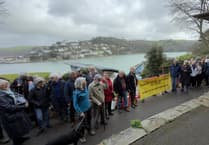


The leat is so old that there were fears that it could give way and flood nearby properties.
Victoria Road was closed for months last year as work to divert the leat underground, coupled with a separate water company and gas pipe project further up the road, went ahead.
The aim was to demolish the old aqueduct once the water had been diverted. But surprised councillors discovered that despite the major scheme there was still water flowing down the old aqueduct – which stands some 10ft above ground level in places.
A South Hams Council spokesman said: 'Back in 1970s, when a new drain was laid in Ford Valley, all the incoming drains were connected up to it.
'Regretfully, we have found that one connection was missed and it is that small amount of water that is still going down the leat.
'We are just waiting for the legal easements to be finalised to allow us to make the final connection.'
He said that Ford Valley was likely to be closed for about two weeks around late February or March next year for the extra work to go ahead.
When asked how much extra the work was going to cost the council he added: 'At this stage it will be accommodated within the contract sum.'
Dartmouth district councillor Hilary Bastone said that the original work on the leat had been completed in January this year.
He told town councillors: 'Or so we thought until it was realised that water was still flowing down the raised section of the leat – albeit a much reduced flow.'
He said the source of the water had now been located and a 'civil engineering' solution had been worked out.
He said that once that work had been carried out the aim was to finally go ahead with the demolition of the aqueduct.
Comments
This article has no comments yet. Be the first to leave a comment.