
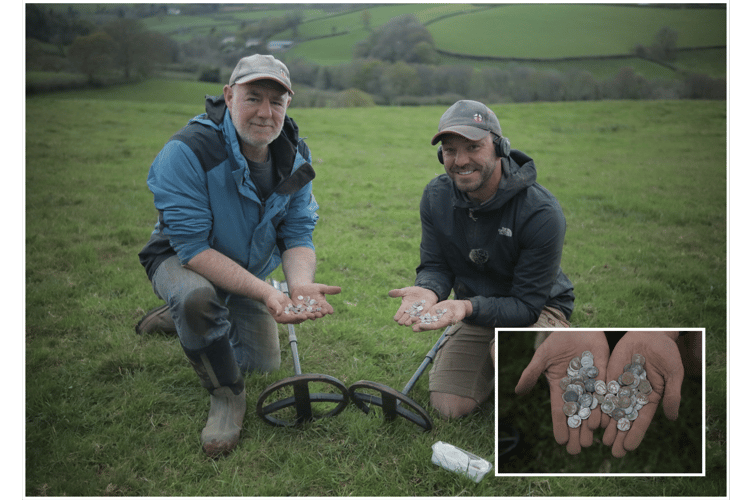
The largest haul of Roman silver coins ever found in Devon has been officially declared treasure after being uncovered in an innocuous South Hams field.
The historic find was made by metal detectorists Michael Eakers and Brian Dixon while walking through a field near North Huish in 2025.
Some 97 silver coins (96 denarii and 1 drachm) and 6 copper alloy (4 sestertii and 2 sestertii, dupondii or asses) were located over a 20 metre square area inches below the surface.
Experts believe the coins were deposited together around AD 205.
-with-Sgt-Adam-Pearcey-Saunders.jpeg?width=209&height=140&crop=209:145,smart&quality=75)


Eakers said the scale of the discovery quickly became apparent.
“Brian found the first coin, and it was the first silver coin he’s ever found, so it was a great moment,” he said, “then we just kept finding more.”
On the first day, the pair visited the farmer who owned the land. Eakers placed a single coin into his hand and watched “his eyes light up” before telling him: “We didn’t just find one...”
“It was really exciting,” Eakers added. “Finding these big silver coins is not something you expect to find in Devon. I’ve been metal detecting for 20 years - you always hope to find something, but I don’t think either of us thought we would get something like this.”
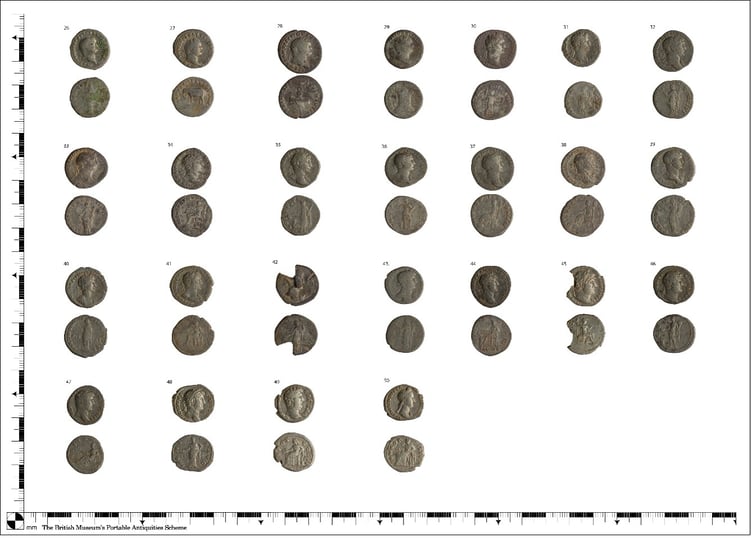
The hoard spans more than 240 years of Roman history. The oldest coins date from the legionary issues of Mark Antony in 32–31 BC, while the most recent were minted during the joint reign of Septimius Severus and Caracalla between AD 198 and 211.
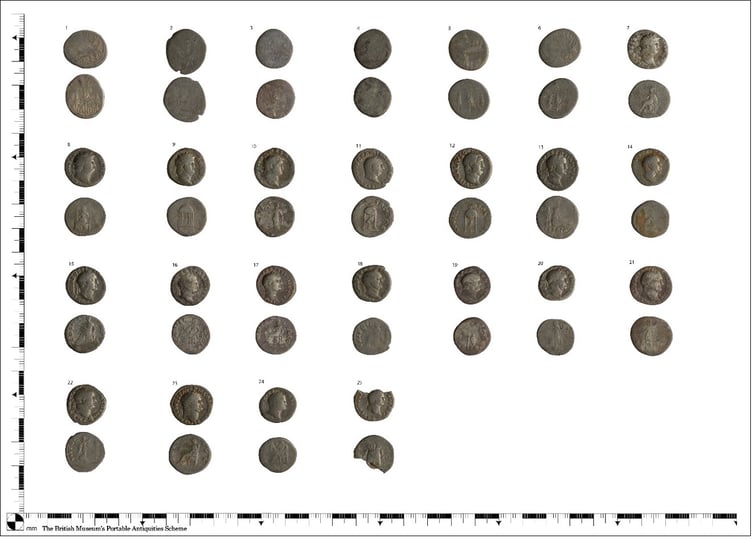
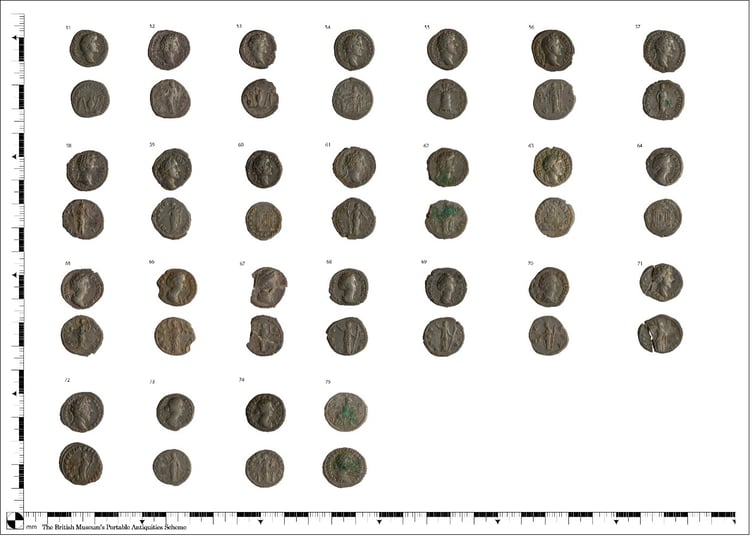
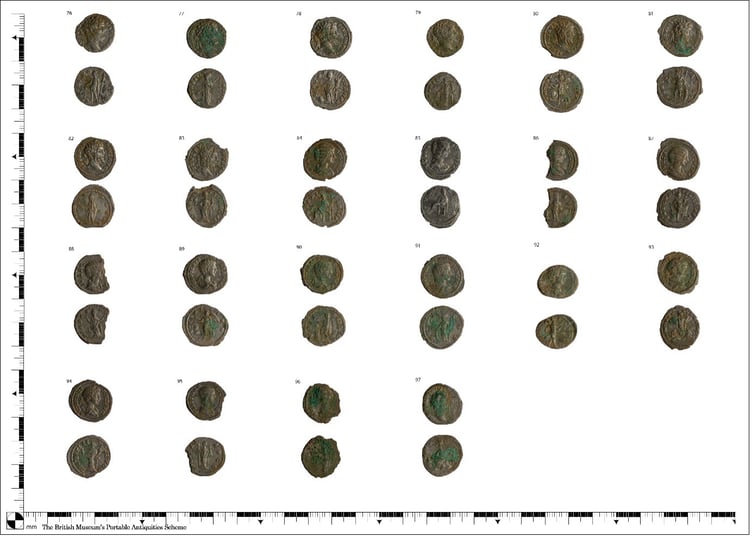
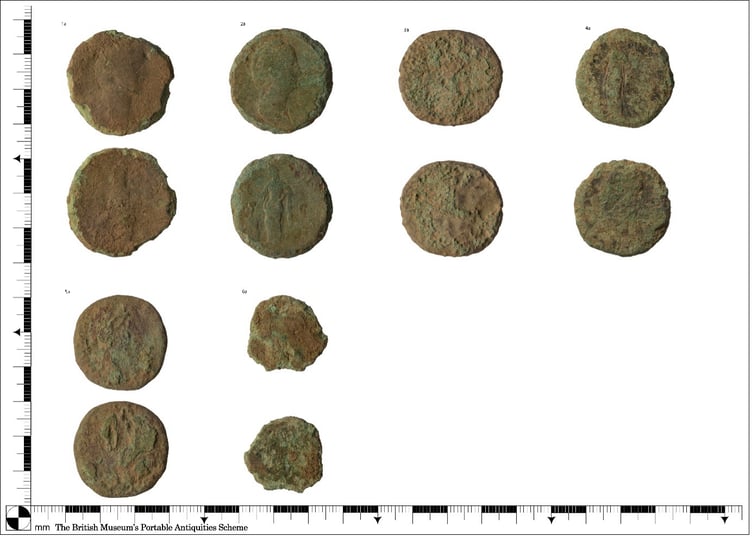
Roman silver coin hoard number 1-25.
Roman silver coin hoard number 26-50.
Roman silver coin hoard number 51-75.
Roman silver coin hoard number 76-97.
Roman copper-alloy coin hoard number 1a-6a.
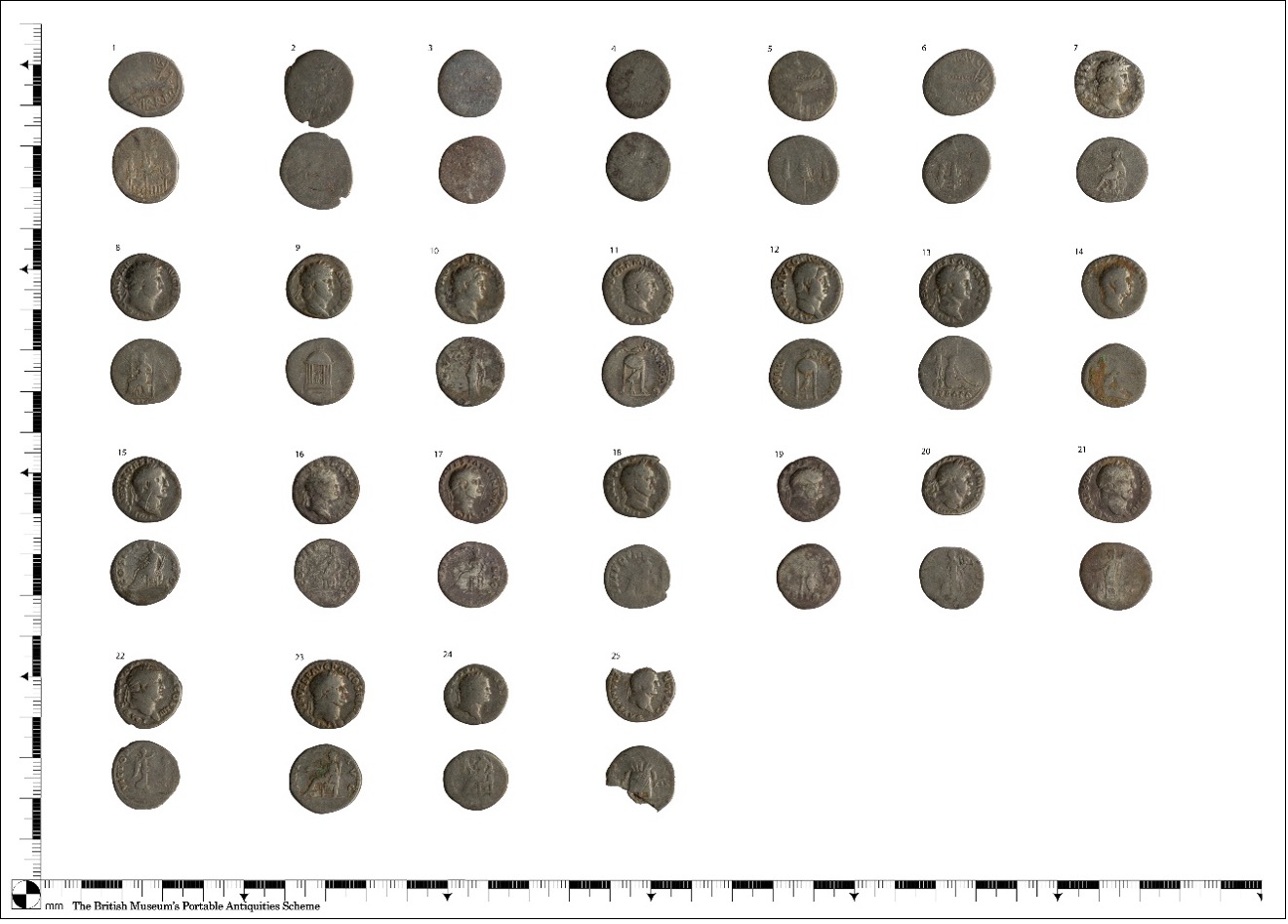
Roman silver coin hoard number 1-25. The British Museum
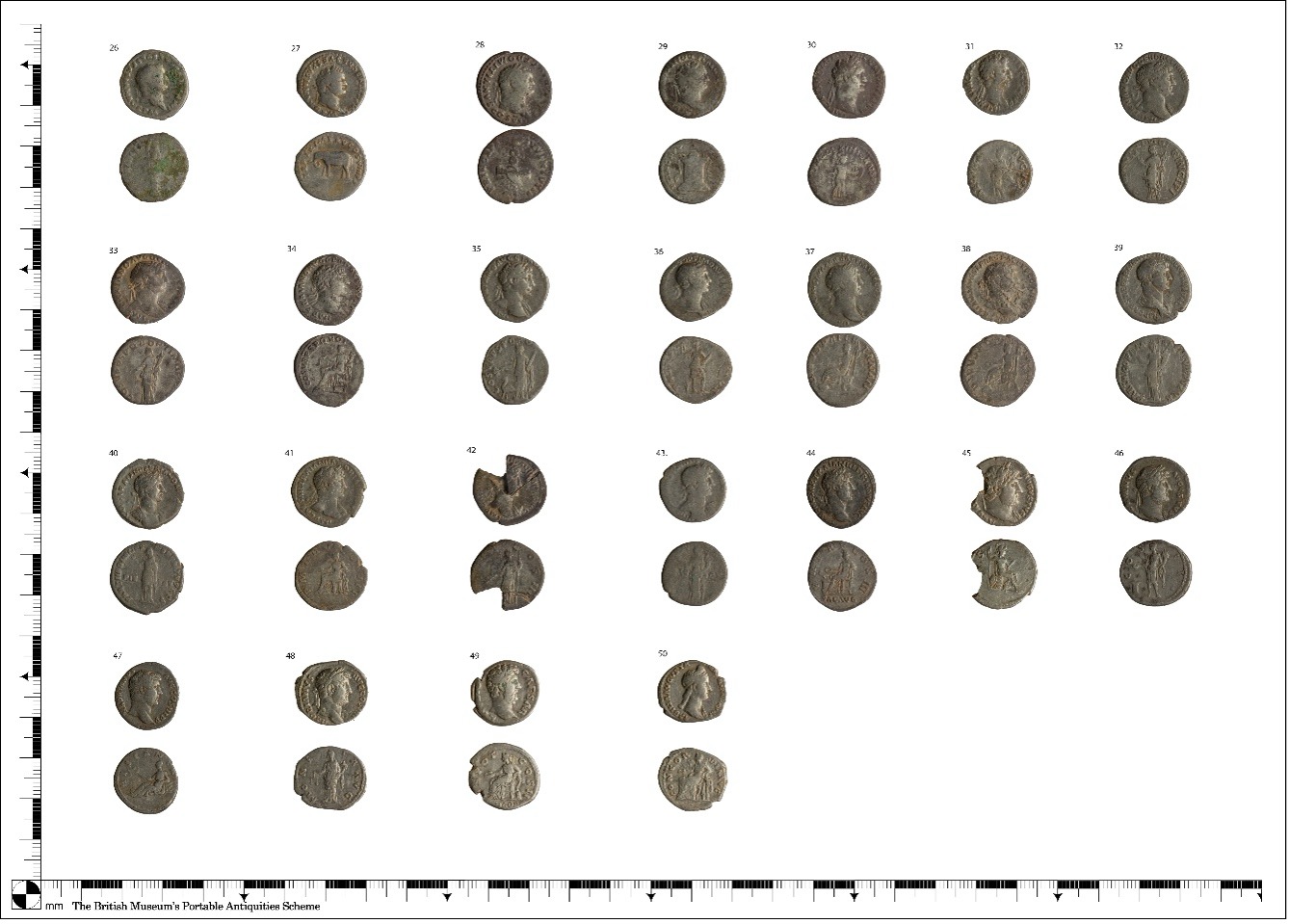
Roman silver coin hoard number 26-50. The British Museum
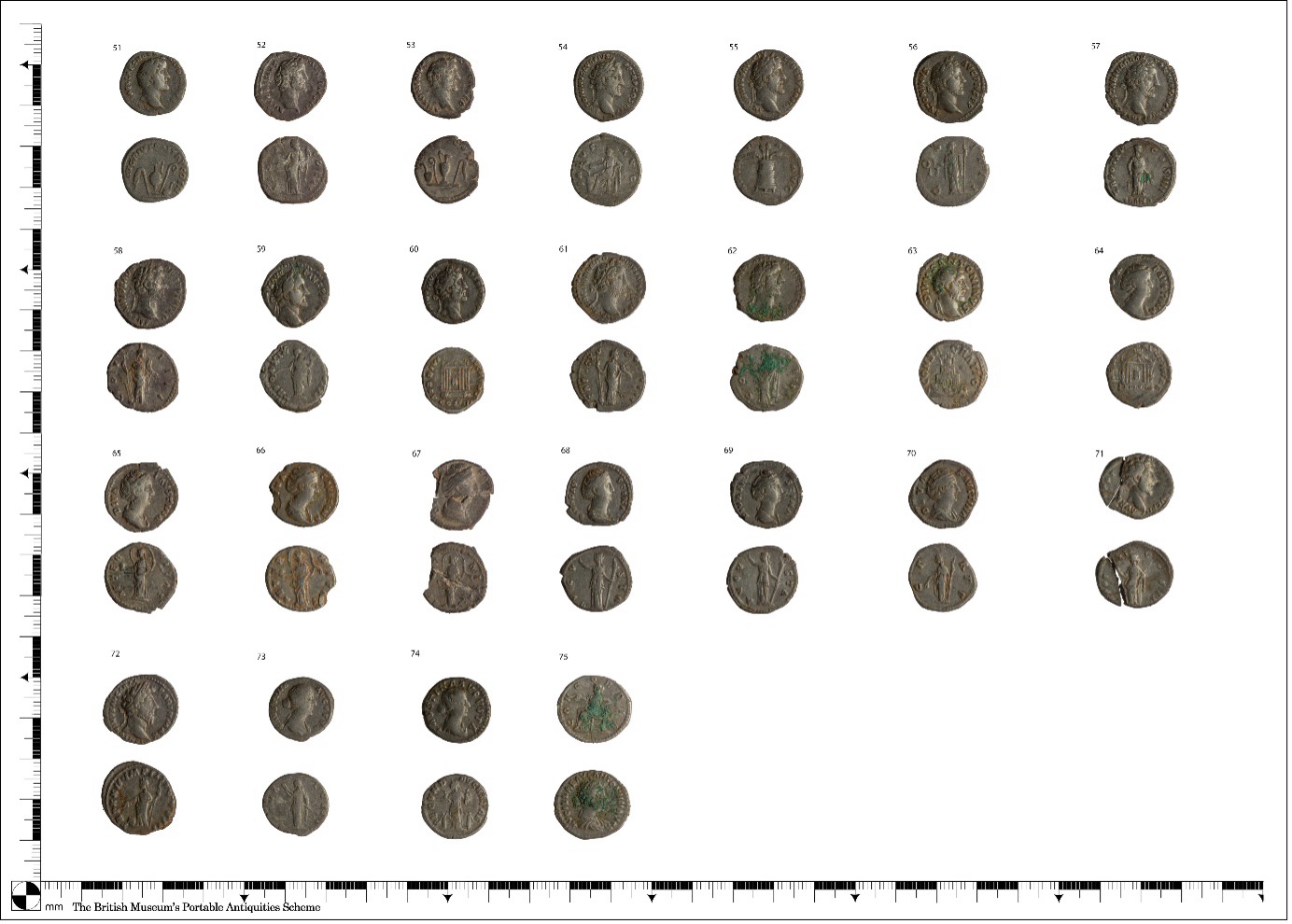
Roman silver coin hoard number 51-75. The British Museum
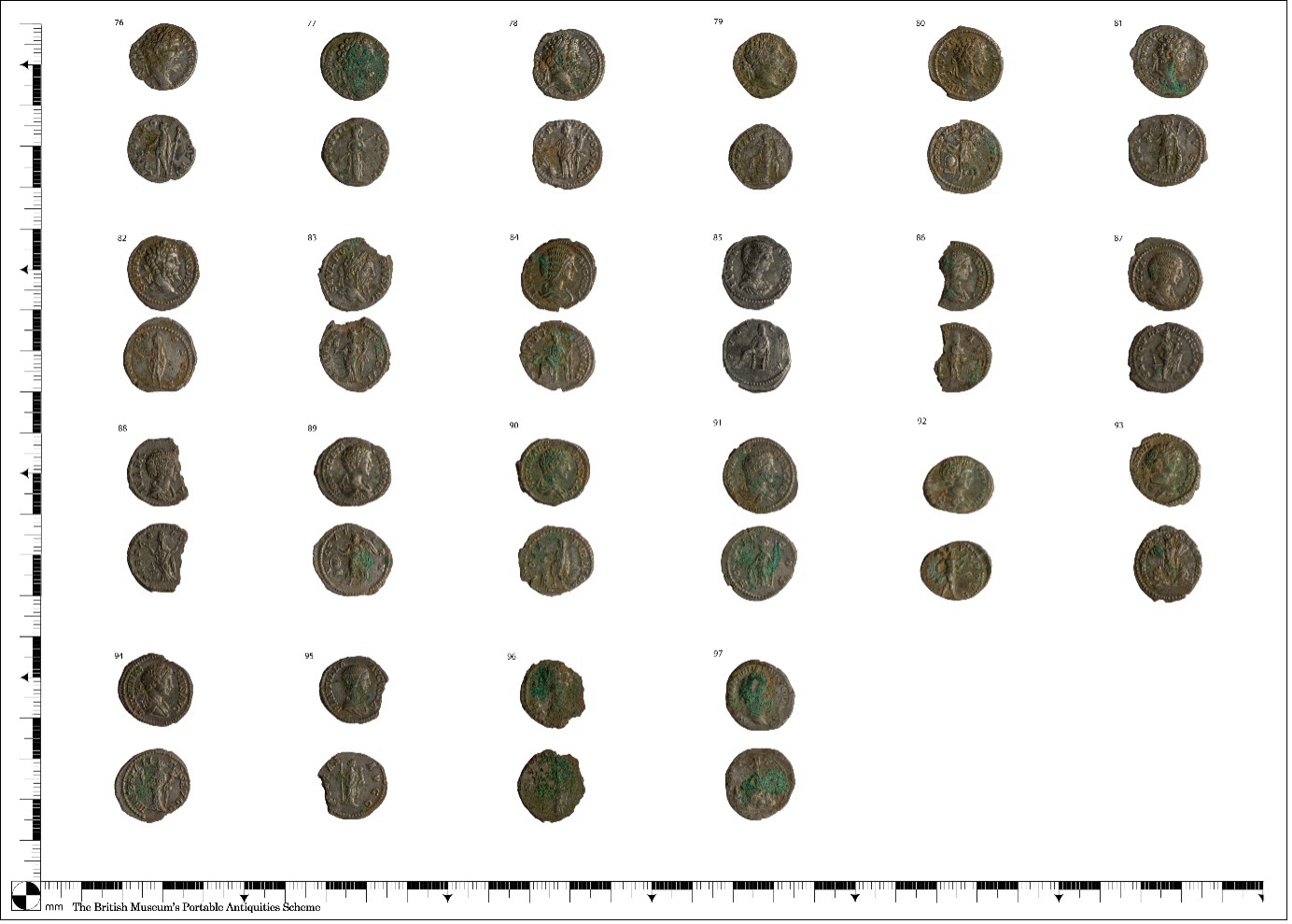
Roman silver coin hoard number 76-97. The British Museum
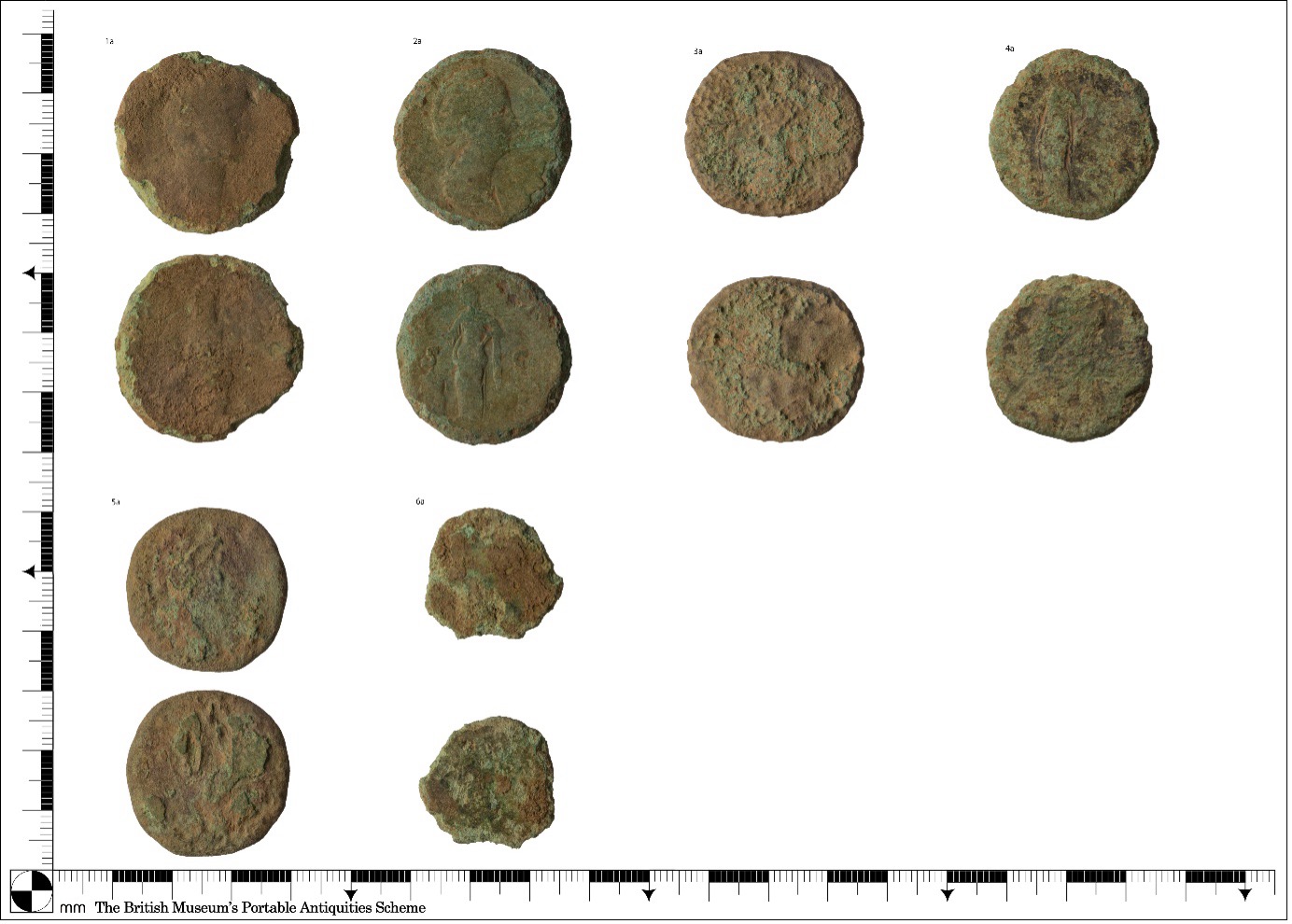
Roman copper-alloy coin hoard number 1a-6a. The British Museum
Among the collection was a rare provincial drachm of Antoninus Pius, issued in Caesarea Mazaca in modern-day Turkey.
The hoard also contained issues from numerous high-profile Roman figures, including:
* Vespasian: 13 denarii
* Trajan: 8 denarii
* Hadrian: 9 denarii
* Antoninus Pius: 13 coins (including one drachm)
* Marcus Aurelius: 1 denarii
Dickon Perryman, Finds Liaison Officer for Devon and Cornwall, described the discovery as hugely significant.
“This is likely to be the largest hoard of Roman silver coinage known from Devon in recent times,” he said.
While Devon has seen major coin discoveries before - including the 22,000-strong Seaton Down Hoard - those finds were largely copper or brass, making the North Huish discovery unusual for its high silver content.
The finders believe the coins may have been buried and never recovered during a period of Roman military movement through the region.
“At the time, a Roman soldier was paid one denarius per day,” said Eakers. “With nearly 100 silver coins in the hoard, the find represents several months' salary, so I think it was stashed and, for whatever reason, never retrieved.”
Because the discovery included more than two precious-metal coins over 300 years old, HM Coroner Philip Spinney officially ruled the hoard treasure on April 30, 2026.
The collection will now be valued by the British Museum, with both the Cookworthy Museum in Kingsbridge and Exeter’s Royal Albert Memorial Museum (RAMM) expressing interest in acquiring the artefacts.
Speaking after the inquest, Eakers said he was “very proud” to contribute to the history of the South Hams.
“I do this solely for this purpose,” he said. “I believe in making a difference to South Hams history and learning about our past.”
Eakers documents his metal detecting adventures on his YouTube channel, Only Me Again Metal Detecting, including the discovery in North Huish.
Comments
We've recently changed our login process. If you have an account for commenting, you will need to re-register on the login window.
This article has no comments yet. Be the first to leave a comment.