
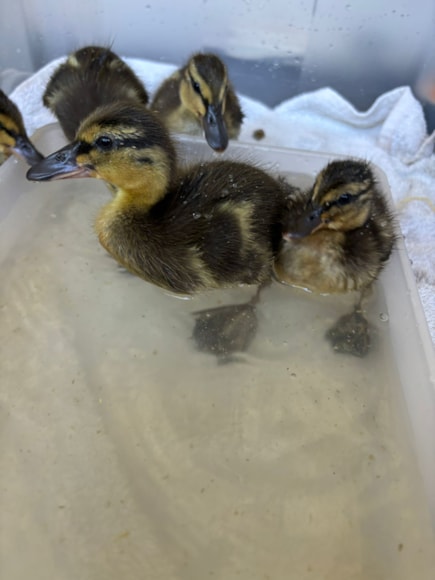
Five adorable ducklings are thriving after a nest of eggs discovered by South West Water’s teams sparked an unexpected rescue.
Catchment Technician James Blakesley and Josh Corderoy, Wastewater Treatment Operator at South West Water, spotted the nest while they were out doing a routine clean of a tank at Totnes Sewage Treatment Works and quickly jumped into action.
Speaking about the rescue, James said: “We couldn’t believe it when we saw the nest.
“We had just got our equipment out to get started with our maintenance works and were shocked when we saw it floating there.
.jpeg?width=209&height=140&crop=209:145,smart&quality=75)

.png?width=209&height=140&crop=209:145,smart&quality=75)

“It was resting on some floating matter which can make its way into our tanks and was at risk of toppling over and being destroyed, so we knew we needed to act quickly to save the eggs.
“We padded out one of our rubble sacks and tethered it to some rope, so it would float, and then used one of our sample poles to gently nudge the eggs out of the nest and into the bag.
“It was a miracle that none of them broke.”
Thanks to James and Josh’s quick thinking, all seven eggs were safely recovered, with James taking them home for incubation to give them the best chance of survival.
It’s not uncommon for birds to nest in parts of the treatment works, but these locations can often make them difficult and sometimes unsafe to reach.
Successful rescues like this are rare, and it’s even less common for the eggs to go on to hatch.
Six of the eggs have since hatched, and five of the ducklings have survived, are developing well and living together.
“The ducklings have been swimming in our paddling pool and settling into their new surroundings where they’ve quickly waddled their way into family life,” said James.
“My daughter loves them and wanted to give them a home in her playhouse, so we repurposed it to let them roam outside during the warmer weather.”
James said the ducklings have now become part of the family, who have decided to keep them and have taken them under their wing as they continue to grow.
“When the ducklings are older, we’ll move them into a larger indoor enclosure before eventually settling them into an old chicken coop next to our stream and pond,” he said.
“We’re hoping they’ll make full use of the streams and ponds around our garden as they continue to grow and be right at home by the water.
“It’s amazing to see how far they have come in the last few weeks.”
Ducklings are known for being highly active.
They are born without waterproof feathers and rely on a warm brooder and specialised chick starter feed for their first four to six weeks of life.
They are covered in soft down - usually yellow, brown, or black depending on the breed - with distinct webbed feet.
Ducklings can walk and swim within hours or days of hatching, but they cannot regulate their own body temperature until they are fully feathered.
Comments
This article has no comments yet. Be the first to leave a comment.