
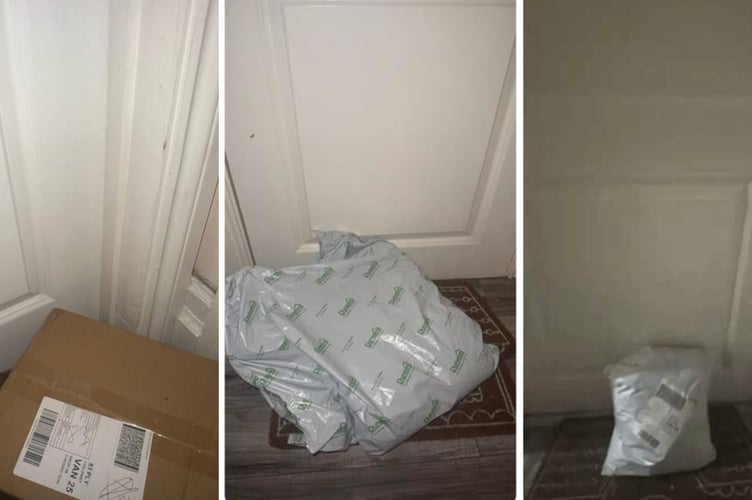
A joint community-led campaign has forced action after a wave of alleged courier fraud left at least 150 households across the South Hams without parcels that were wrongly marked as delivered.
The effort, spearheaded by Loddiswell resident Luke Jones, brought together people from Loddiswell, Aveton Gifford, Kingsbridge, Modbury, Churchstow and surrounding villages after reports of missing deliveries began to reveal strikingly similar patterns.
Residents reported parcels being declared delivered using identical photographs and locations, images showing only a blank black screen, or claims that items had been left in porches that did not exist.
Mr Jones and affected residents have now compiled evidence of at least 150 confirmed cases of suspected fraudulent delivery, all linked to the same courier route.




Evri has since confirmed that the driver involved will no longer be delivering on their behalf.
“This was a joint community effort,” Mr Jones said. “People came forward with screenshots, timestamps, photos and delivery records. Once everything was put together, the scale of what was happening became impossible to ignore.”
Residents were encouraged to report their cases under a shared crime reference number, allowing Devon & Cornwall Police to assess the matter collectively rather than as individual losses.
Police have confirmed that they are investigating multiple reports of parcels stolen or falsely marked as delivered across the area.
The issue has reignited wider concerns about the reliability of private delivery services in rural communities.
During a Westminster debate on postal services, South Devon Liberal Democrat MP Caroline Voaden highlighted serious failures affecting her constituents, including missed hospital appointments caused by late deliveries and sensitive financial documents arriving together instead of separately.
Ms Voaden also told MPs that an Evri driver had dumped parcels in a field after being unable to complete a route within the time allocated — a claim that added to growing concerns about pressure on delivery drivers and unrealistic workloads.
Despite Evri stating that it delivers more than 900 million parcels a year and mandates photographic proof of delivery, critics argue that such systems can be exploited.
Beyond seeking accountability for past losses, Mr Jones and members of the community are now pursuing further legal action and broader reform.
He has launched a petition calling for changes to consumer protection law, arguing that responsibility currently falls unfairly on customers and retailers rather than delivery firms.
“The law currently protects couriers while leaving us, the consumers, with no direct rights. I am launching this petition to change the Consumer Rights Act 2015. We are demanding that delivery firms be held directly accountable for ‘black screen’ fraud and falsified deliveries,” he said.
Evri has apologised to customers affected and said it remains committed to improving service standards. However, for many residents, the case has exposed deeper systemic issues — not just about one driver, but about trust, accountability, and the vulnerability of rural communities within modern delivery networks.
Comments
This article has no comments yet. Be the first to leave a comment.