
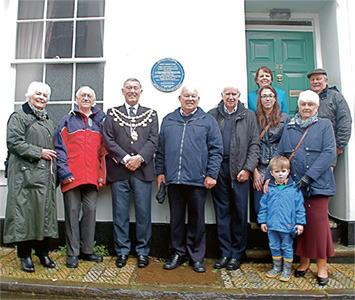
THE inspiring and creative spirit of Dartmouth's past distinguished citizens have been recognised at ceremonies in the town.
Blue plaques commemorating the lives Arthur Holdsworth and Henry Inder, who was known as Harry, have been unveiled.
Descendants of both families were present at the unveilings, which were performed by mayor Cllr Paul Allen.
The plaques were paid for by the Dartmouth and Kingswear Society and Dartmouth Town Council.


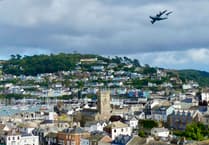
Local author Joslin Fiennes and society vice-president Eric Preston undertook historical research and Mr Preston organised preparation of the plaques. There are now 16 blue plaques in the town, most jointly sponsored by the society and the town council, to draw public attention to where key figures in the town's rich history lived or worked. The society is updating its publications with a blue plaque trail as part of an historic walk through Dartmouth.
Welcoming the families, Cllr Allen said: 'Blue plaques honour the achievements of exceptional people in the story of a great town. Henry Inder was not as well known as Arthur Holdworth and has been reclaimed from the past.'
At the unveiling of one plaque at Mount Galpine on Clarence Hill, Mr Preston said: 'Arthur Howe Holdsworth, 1780-1861, was nationally regarded as one of the most talented members of his family in the arts sciences and politics.
'He was mayor, the last governor of Dartmouth Castle and MP for Dartmouth from 1802-1820 and again from 1829-1832.
'He was a prime mover in the building of Victoria Road, the filling in of the Mill Pool to create the Market Square and Old Market, and he rebuilt the grain mill at Warfleet as a paper mill. He designed the carvings for the corporation's seats in St Saviour's Church and made naval improvements, such as a ship's rudder, watertight bulkheads and a fireproof magazine.'
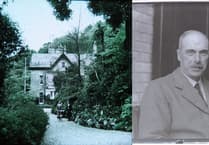
At 33 Clarence Hill, formerly 4 St Clair's Terrace, Mr Preston said: 'Henry James Inder, 1871-1945, moved to Dartmouth from Somerset in the 1890s to join shipbuilders Simpson Strickland and Co, later Philip and Sons.
'The son of a blacksmith, Harry had been apprenticed to a millwright, which taught him how to be innovative and resourceful in solving engineering problems,' he said.
'He built three steam-powered motor cars, then invented his own petrol-engined car, the first in Dartmouth.
'He ran a garage, first in Victoria Road, then on the South Embankment and patented the Inder reverse gear for motor launches and a powered capstan.'
Comments
This article has no comments yet. Be the first to leave a comment.