
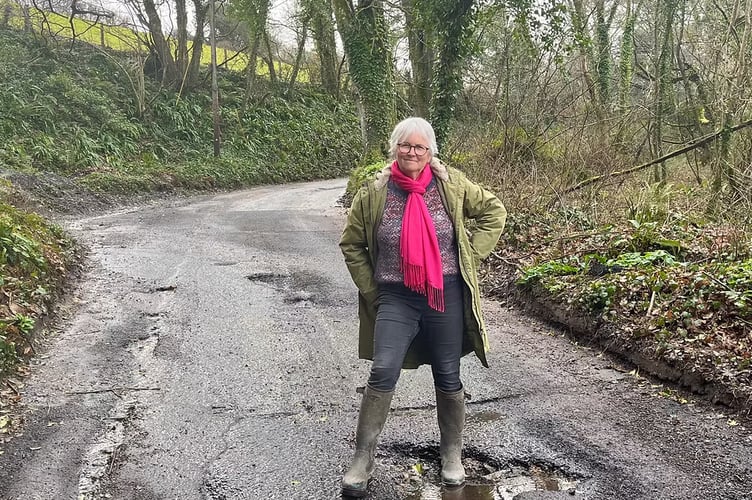
A Devon councillor says it is time for communities to “embrace the spirit” and fix their own roads, warning that “being angry is not going to fix a pothole.”
Louise Wainwright, Devon County Councillor for the Salcombe area, is championing a shift toward community-led repairs as the council grapples with a £390 million backlog of essential maintenance.
She says the scale of the problem has been worsened by a 72% reduction in the annual Government grant to Devon County Council (DCC) since 2011 — funding which supports all council services, including highways.
DCC remains legally responsible for repairing reported potholes, but due to funding pressures it has been forced to adopt a strict “mend defects only” policy.




A “defect” pothole must be at least 4cm deep with a vertical edge and 30cm wide before the council is obligated to repair it.
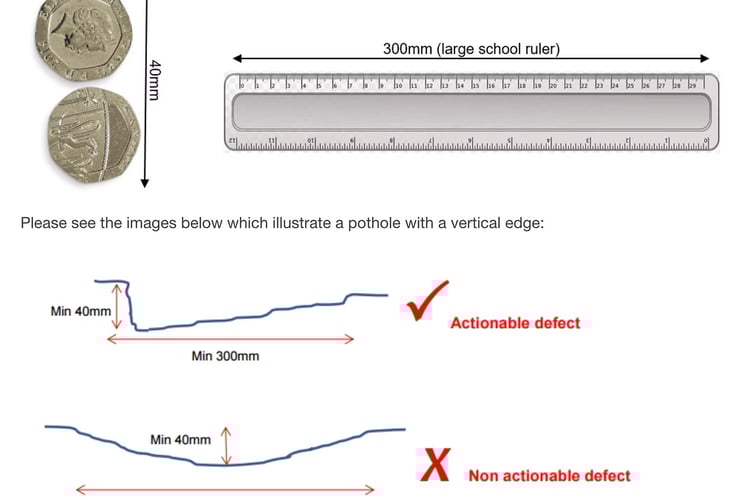
Once reported, a highways inspector assesses the pothole, completes a risk evaluation, and prioritises the repair based on factors such as traffic levels, location and severity.
During the peak winter period for pothole development, larger highway crews are often redeployed to repair smaller potholes on minor roads.
Cllr Wainwright says if “non-defect” potholes were repaired earlier by Road Warden volunteers, it could reduce pressure on highway teams and save money.
Repairs carried out in wet winter weather can also be temporary. It is not always possible to use the specialist emulsion that permanently bonds cold tar, as the material can pose a risk to aquatic life if there is run-off.
Cllr Wainwright says the scale of the problem means communities cannot rely solely on traditional repair methods, and is encouraging volunteers to work alongside DCC through its Road Warden Scheme.
“We don’t want to ask people to give any more of their hard-earned money, especially during a cost-of-living crisis,” she said. “But if we all gave a little bit of our time to our communities, we could get Devon’s roads back to a functioning state.”
Under the initiative, DCC provides training, insurance and materials, allowing volunteers to repair minor potholes on smaller roads — which make up 87% of Devon’s network — before they deteriorate further.
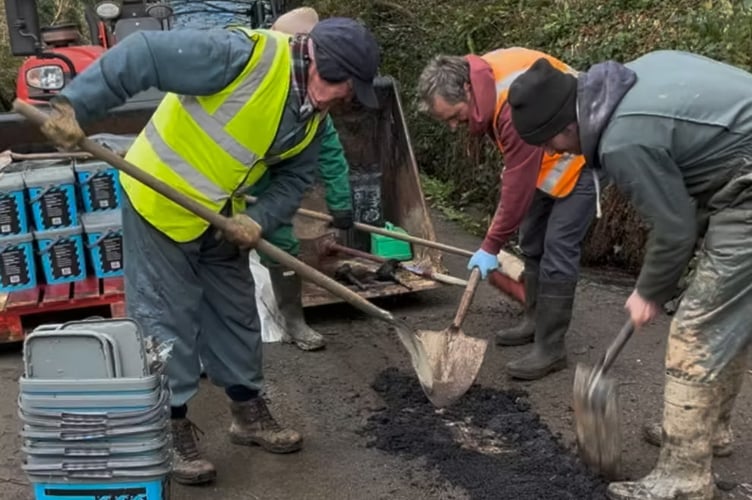
However, fewer than a third of Devon’s 426 parish and town councils are currently signed up.
To encourage wider participation, Cllr Wainwright is preparing to publish a Parish Council Highways Handbook outlining how councils can join the scheme and work more closely with DCC highways officers.
“All manner of volunteering would help,” she said. “Clearing drains and gullies, litter picking, looking after verges — it all reduces water build-up and damage to our roads.”
In the 2026/27 budget, £36 million has been allocated for highways maintenance — £6 million more than the previous year — alongside more than £100 million for preventative work.
Despite this, residents say the scale of the problem is obvious.
South Devon resident Peter Coxon said potholes damaged five tyres and two alloy wheels on family vehicles in less than a week.
“We are forced to drive wider in the road and swerve at the last second,” he said. “It’s dangerous and will result in accidents.
“I’ve been driving in South Devon for 56 years and never experienced anything this bad.”
Cllr Wainwright believes community action could help change that.
“Until volunteers step forward,” she said, “next winter will be much worse.”
Comments
We've recently changed our login process. If you have an account for commenting, you will need to re-register on the login window.
This article has no comments yet. Be the first to leave a comment.